As an experienced technician in humidification, with over a decade dedicated to understanding these essential devices, I know firsthand the subtle yet profound impact humidity has on our living spaces. For homeowners with beautiful wood floors, maintaining the right indoor humidity isn’t just about comfort; it’s crucial for preserving the integrity and longevity of your investment. Wood, a natural and dynamic material, reacts significantly to its environment, making humidity control a cornerstone of proper floor care. This comprehensive guide will walk you through everything you need to know about choosing, using, and maintaining the best humidifiers to keep your wood floors looking pristine for years to come.
What is a Humidifier and Why Do Your Wood Floors Need One?
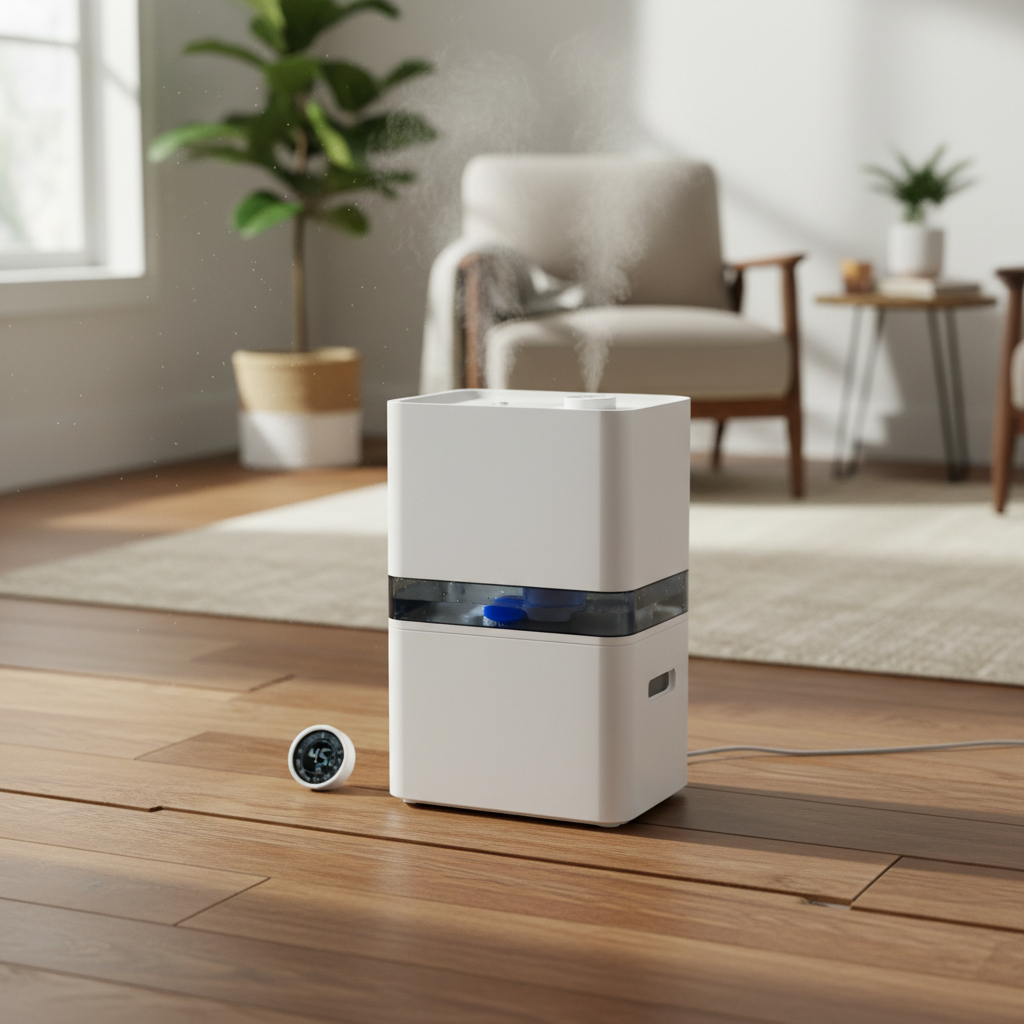
A humidifier is a device designed to add moisture to the air. While often associated with personal comfort and health benefits like alleviating dry skin or respiratory issues, their role in protecting wood floors is equally vital. Wood is hygroscopic, meaning it constantly absorbs and releases moisture, striving to reach equilibrium with the surrounding air. When the air becomes too dry, wood loses moisture, causing it to shrink, leading to unsightly gaps between boards, and in severe cases, cracking or splitting. Conversely, excessive humidity causes wood to absorb too much moisture, expanding and potentially leading to issues like cupping (where board edges rise), crowning (where board centers rise), or even buckling and mold growth.
Maintaining an optimal indoor relative humidity (RH) level—ideally between 35% and 55%—minimizes these damaging fluctuations. A humidifier acts as a regulator, introducing moisture into dry environments, especially during colder months when heating systems strip the air of humidity. By stabilizing the RH, you prevent the extreme expansion and contraction that shortens your wood floor’s lifespan and detracts from its beauty.
Popular Humidifier Types: Pros and Cons for Wood Floor Safety
Understanding the different types of humidifiers is key to selecting the one that best suits your home and offers the most protection for your wood floors. Each type employs a unique mechanism to add moisture to the air, with varying implications for safety and maintenance.
Evaporative Humidifiers
Evaporative humidifiers are often considered the safest choice for homes with wood floors. They work by drawing dry air through a wet wick or filter, using a fan to gently distribute the moistened air. This self-regulating process means they rarely over-humidify a space, as the rate of evaporation naturally decreases as the ambient humidity rises.
- How they work: A fan blows air over a saturated wick or filter, causing water to evaporate into the air.
- Pros: Energy-efficient, tend to be more affordable, self-regulating against over-humidification, less likely to produce white dust (mineral deposits) when using tap water compared to ultrasonic models.
- Cons: Requires regular filter replacement, fan noise can be noticeable, may be less effective in very large spaces if not a whole-house unit.
|
Our Picks for the Best Humidifier in 2026
As an Amazon Associate I earn from qualifying purchases.
|
||
| Num | Product | Action |
|---|---|---|
| 1 | LEVOIT Humidifiers for Bedroom Large Room Home, (6L) Cool Mist Top Fill Essential Oil Diffuser for Baby & Plants, Smart App & Voice Control, Rapid Humidification & Auto Mode - Quiet Sleep Mode, Gray |

|
| 2 | Dreo Humidifiers for Bedroom, 4L Top Fill for Large Room, 36H Runtime, 28 dB Quiet Supersized Cool Mist Air Humidifier for Baby Nursery, Plants, Indoor, Night Light, Easy to Clean & Fill, White |
|
| 3 | Humidifiers for Bedroom Large Room with 7L/1.85Gal Large Humidifier, Smart App & Remote Control, 4 Mist Levels Large Room Humidifiers for Home Midnight |
|
| 4 | BREEZOME 6L Humidifiers for Bedroom Large Room & Essential Oil Diffuser, Ultrasonic Top Fill Cool Mist Humidifiers for Baby, Plants, Nursery Last up to 60 Hours, Smart Humidistat Control, Quiet, Black |
|
| 5 | BOXING 3L Cool Mist Humidifiers, Ultra Quiet 20dB for Bedroom, Baby & Office, Top Fill Air Humidifier for Large Room Home & Indoor Plants, 30H Runtime, Essential Oil Tray, Night Light, BPA-Free, White |
|
| 6 | LEVOIT Top Fill Humidifiers for Bedroom, 2.5L Tank for Large Room, Easy to Fill & Clean, 28dB Quiet Cool Mist Air Humidifier for Home Baby Nursery & Plants, Auto Shut-off for Safety, 25H |
|
| 7 | LEVOIT - Humidifiers for Bedroom - Quiet (3L Water Tank) - Cool Mist/Top Fill/Essential Oil Diffuser/25Watt - Home/Large Room - 360° Nozzle - Rapid Ultrasonic Humidification for Baby Nursery/Plant |
|
| 8 | Homvana Humidifiers for Bedroom Home, 3.6 L Cool Mist Top-Fill 34H Super Long Time, Quiet 23dB, Baby Humidifier, Oil Diffuser for Large Room, House, Plant, Nursery, Office, BPA FREE, Ultrasonic (Grey) |
|
| 9 | MegaWise Topfill 7-colour Night light humidifier for Kid bedroom with 3.5L Large Capacity, No leakage Design Fine Mist Output Auto Shutoff, Essential Oil Safe Tank |
|
| 10 | Dreo Smart Humidifiers for Bedroom, Top Fill 4L Supersized Humidifier Large Room with 28 dB, 36H Runtime, Touch/APP/Voice Control, Nightlight, Cool Mist Humidifiers for Baby, Plants, Indoor, Black |
|
Ultrasonic Humidifiers
Ultrasonic humidifiers use high-frequency sound vibrations to create an extra-fine, cool mist. They are favored for their quiet operation and ability to quickly increase humidity levels. However, they can potentially release minerals from tap water into the air, creating a fine white dust that settles on surfaces, including wood floors. This “white dust” can be mitigated by using distilled water.
- How they work: A metal diaphragm vibrates at ultrasonic frequencies, creating a cool mist from water droplets.
- Pros: Very quiet operation, produce a visible cool mist, often compact and aesthetically pleasing.
- Cons: Can produce “white dust” if tap water is used, potentially leading to mineral buildup on surfaces. Can sometimes over-humidify if not equipped with a humidistat.
Steam Vaporizers (Warm Mist Humidifiers)
Steam vaporizers operate by heating water to its boiling point, releasing a clean, warm steam into the air. The boiling process naturally kills most bacteria and molds in the water, making them hygienic. However, they consume more electricity and, due to the hot steam, require careful placement to avoid burns or condensation damage to nearby surfaces.
- How they work: An internal heating element boils water, producing steam that is released into the room.
- Pros: Kills bacteria and mold in the water, provides warm mist, can be soothing for respiratory issues.
- Cons: Higher energy consumption, hot steam poses a burn risk, can create excessive condensation if too close to surfaces, requires frequent cleaning to prevent mineral buildup in the heating element.
Impeller Humidifiers (Cool Mist)
Impeller humidifiers, also known as cool mist humidifiers, use a rotating disc to break water into tiny droplets, which are then released into the air as a cool mist without using heat. They are generally safe and efficient but can be louder than ultrasonic models.
- How they work: A rapidly rotating disc spins water against a diffuser, breaking it into fine droplets that are expelled as a cool mist.
- Pros: Safe to use around children and pets (no hot water), relatively energy-efficient.
- Cons: Can be noisy, require regular cleaning to prevent mold growth in the water tank.
Comparison Table of Humidifier Types
Here’s a quick comparison to help you weigh your options:
| Feature | Evaporative | Ultrasonic | Steam Vaporizer | Impeller |
|---|---|---|---|---|
| Mist Type | Cool, invisible | Cool, visible | Warm, visible | Cool, visible |
| Wood Floor Safety | Very High (self-regulating) | High (use distilled water) | Medium (careful placement) | High |
| Energy Use | Moderate | Low | High | Low |
| Noise Level | Moderate (fan) | Very Low | Silent (boiling hum) | Moderate (rotating disc) |
| Maintenance | Regular filter replacement, cleaning | Regular cleaning, distilled water for no white dust | Regular descaling of heating element, cleaning | Regular cleaning |
| White Dust | Rare | Common (with tap water) | None | Rare |
| Germs/Mold | Filters some, regular cleaning critical | Regular cleaning critical | Kills most in water | Regular cleaning critical |
How to Choose the Right Humidifier: Key Factors to Consider
Selecting the ideal humidifier for your home involves more than just picking a type. Several factors should influence your decision to ensure optimal protection for your wood floors and overall home comfort.
Room Size and Coverage Area
The capacity of a humidifier is typically measured by the area it can cover, often expressed in square feet. It’s crucial to match the humidifier’s capacity to the size of the room or area where your wood floors are located. An undersized unit will struggle to reach optimal humidity levels, while an oversized one can lead to excessive moisture and potential damage.
- Calculate your room’s square footage: Length x Width = Area.
- Consider whole-house systems: For homes with wood floors throughout, a whole-house humidifier integrated with your HVAC system offers consistent, centralized humidity control, eliminating the need for multiple portable units.
Desired Humidity Level
Wood flooring manufacturers generally recommend maintaining relative humidity between 35% and 55%. This range minimizes expansion and contraction. Many modern humidifiers come with built-in humidistats that allow you to set your desired humidity level, and the unit will automatically adjust its output to maintain it.
- Invest in a hygrometer: Even with a built-in humidistat, a separate hygrometer (humidity monitor) provides an accurate reading and helps you verify that your humidifier is performing correctly.
Budget Considerations
Humidifiers vary widely in price, from small, affordable personal units to sophisticated whole-house systems. Your budget will influence the type, features, and coverage area you can achieve.
- Entry-level: Portable evaporative or ultrasonic units are generally more budget-friendly.
- Mid-range: Larger portable units with advanced features like digital controls, auto-shutoff, and larger tanks.
- High-end: Whole-house systems offer the most comprehensive and convenient solution but require professional installation and a higher initial investment.
Additional Features for Enhanced Protection
Beyond basic humidification, certain features can significantly enhance a humidifier’s effectiveness and convenience, especially when protecting wood floors.
- Built-in Humidistat and Automatic Shut-off: Essential for preventing over-humidification, these features automatically turn the unit off once the desired humidity level is reached.
- Adjustable Output Settings: Allows you to fine-tune the mist output based on current humidity conditions and your floor’s needs.
- Large Water Tank/Continuous Water Supply: Reduces the frequency of refills, especially beneficial for whole-house systems connected directly to your home’s plumbing.
- Low Water Indicator: Alerts you when the tank needs refilling.
- Quiet Operation: Important for bedroom or living area placement.
- Easy Cleaning Access: Simplifies regular maintenance, crucial for preventing mold and bacteria growth.
- Waterproof Mat/Tray: For portable units, placing them on a waterproof mat or tray provides an extra layer of protection against potential leaks or condensation, safeguarding your wood floors.
Reputable Brands
While specific product recommendations are outside this scope, focusing on established brands known for reliability and customer service can provide peace of mind. Researching user reviews and expert ratings for models within your chosen type and budget range is always a wise approach.
Top Humidifiers for Protecting Wood Floors (General Categories)
Instead of listing specific models that frequently change, let’s look at the types and features that consistently earn high marks for wood floor protection.
- Whole-House Humidifiers (Bypass or Fan-Powered): These are the gold standard for homes with extensive wood flooring. Integrated into your HVAC system, they provide consistent humidity throughout your entire home. Look for models with an outdoor thermostat sensor for automatic adjustment to external temperatures, and blower fan control to operate even when the furnace isn’t actively heating. They eliminate the concerns of portable unit leaks and localized over-humidification.
- Large-Capacity Evaporative Humidifiers: For individual rooms or open-concept spaces where a whole-house system isn’t feasible, a robust evaporative model is excellent. Prioritize units with a built-in humidistat, multiple fan speeds, and a large water reservoir for extended operation. The AIRCARE EP9 800 Digital Whole-House Pedestal-Style Evaporative Humidifier, for example, is praised for its ability to cover large areas and its precise humidity control.
How to Use and Maintain Your Humidifier for Wood Floor Safety
Proper usage and regular maintenance are just as important as choosing the right humidifier. These practices ensure your unit functions effectively and safely, protecting your wood floors from both dryness and excess moisture.
Correct Usage Tips
- Monitor Humidity Levels: Use a hygrometer to continuously monitor your indoor relative humidity. Aim for 35-55% RH.
- Placement Matters:
- For portable units, place them at least six feet away from wood floors and furniture to prevent localized moisture buildup.
- Always place portable units on a waterproof mat or tray.
- Avoid placing humidifiers directly under vents or near windows where condensation can form.
- Use Distilled Water (for ultrasonic humidifiers): If you own an ultrasonic humidifier, using distilled or demineralized water significantly reduces the “white dust” residue that can settle on floors and surfaces.
- Automatic Controls: Utilize your humidifier’s humidistat and auto-shutoff features to prevent over-humidification.
- Adjust Seasonally: You may need to adjust your desired humidity level based on outdoor temperatures. In very cold weather, maintaining lower indoor humidity can prevent condensation on windows and within walls.
Essential Maintenance for Longevity
Regular cleaning and maintenance are critical for both the humidifier’s performance and the safety of your home environment.
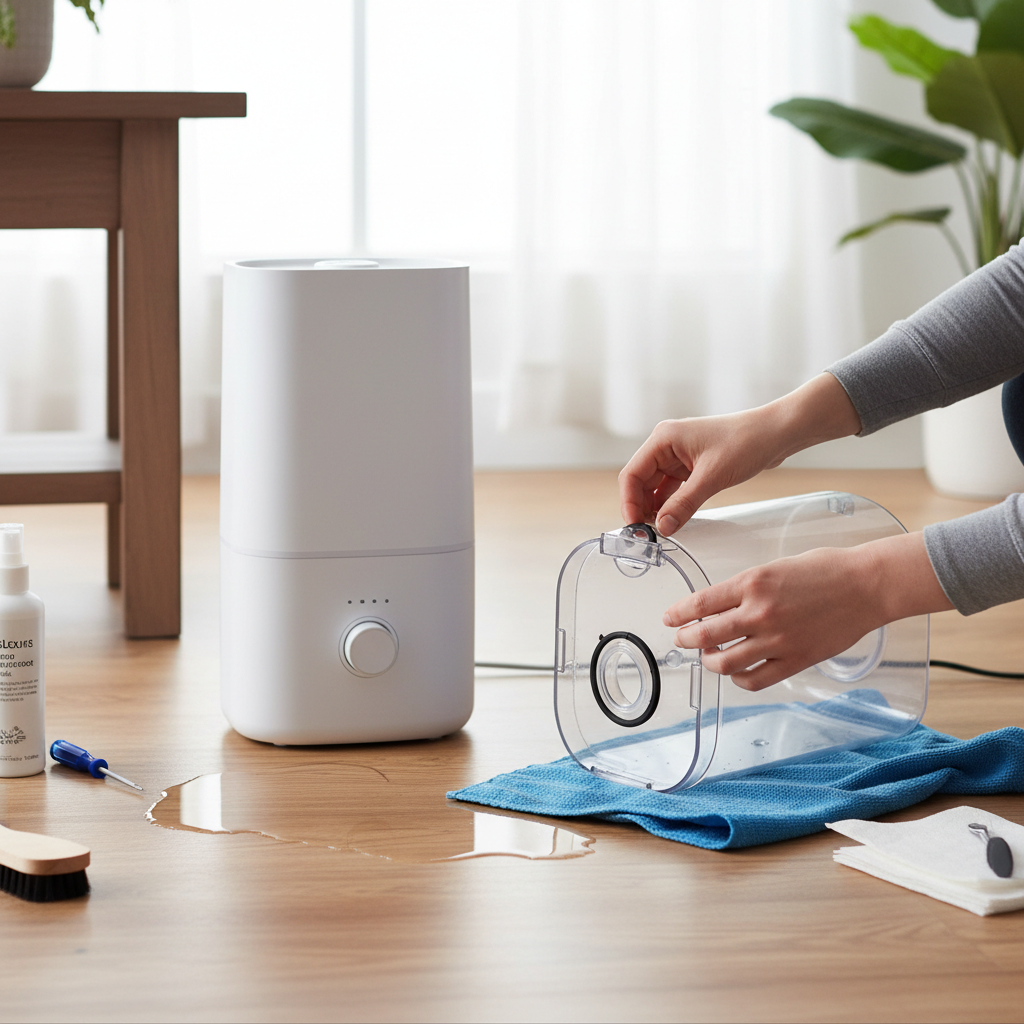
- Daily Refills and Water Changes: Empty and rinse the water tank daily to prevent stagnant water, which can promote bacterial and mold growth.
- Weekly Cleaning: Disassemble and clean all parts of your humidifier at least once a week. Use a vinegar solution (white vinegar and water) to remove mineral deposits, then rinse thoroughly. Bleach solutions can be used for disinfection but must be rinsed meticulously.
- Filter Replacement (for evaporative units): Change evaporative wicks/filters according to the manufacturer’s recommendations, typically every 1-3 months, depending on usage and water hardness. Dirty filters can reduce efficiency and harbor mold.
- Descaling (for steam vaporizers): Regularly descale the heating element of steam humidifiers to maintain efficiency.
- Inspect for Leaks: Periodically check your humidifier for any signs of leaks or condensation around the unit, addressing them immediately to prevent water damage to your floors.
Common Humidifier Issues and Solutions
- White Dust: (Ultrasonic humidifiers) Use distilled water or consider an evaporative unit.
- Mold/Mildew Smell: Thoroughly clean all parts with a vinegar solution. Ensure daily water changes.
- Ineffective Humidification: Check water levels, clean/replace filters, ensure the unit is appropriately sized for the space.
- Excessive Condensation: Lower the humidity setting, move the humidifier away from cold surfaces, ensure proper ventilation.
“A well-maintained humidifier is an invisible guardian for your wood floors. Consistent humidity is the secret to preventing costly damage and preserving their natural beauty.” – Alex Nguyen, Humidification Systems Expert
Frequently Asked Questions About Humidifiers and Wood Floors
What is the ideal humidity level to protect wood floors?
The National Wood Flooring Association (NWFA) and many experts recommend maintaining indoor relative humidity (RH) between 35% and 55% to prevent wood floors from expanding, contracting, or showing signs of damage. This range allows for minor natural movement without compromising the floor’s structural integrity or appearance.
Can a humidifier damage my wood floors?
Yes, improper humidifier use can damage wood floors. Excessive moisture from over-humidification can lead to cupping, crowning, buckling, or even mold growth. Water leaks, spills, or condensation from the unit itself can also cause significant damage if not addressed promptly. Proper placement, monitoring, and maintenance are crucial.
Should I use a whole-house humidifier for wood floors?
For homes with extensive wood flooring, a whole-house humidifier integrated into your HVAC system is often the most effective solution. It provides consistent, even humidity distribution throughout your entire home, offering superior protection compared to multiple portable units that only affect localized areas.
How far should a portable humidifier be from wood floors?
To prevent localized moisture buildup and potential water damage, a portable humidifier should be placed at least six feet away from wood floors, walls, and furniture. Always use a waterproof mat or tray underneath the unit as an added precaution against spills or condensation.
Do all types of wood floors react the same way to humidity?
While all wood floors are hygroscopic, solid hardwood floors are generally more sensitive to humidity changes than engineered wood floors. Engineered wood, with its layered construction, offers greater stability and is somewhat more resistant to expansion and contraction, though maintaining optimal humidity is still essential for its longevity.
Conclusion
Protecting your beautiful wood floors from the damaging effects of fluctuating humidity is a critical aspect of home care. By understanding how humidity impacts wood, selecting the right type of humidifier—with evaporative or whole-house systems often being the top recommendations—and diligently following usage and maintenance guidelines, you can ensure your floors remain a stunning feature of your home for decades. Taking proactive steps to regulate your indoor environment not only safeguards your investment but also contributes to a healthier, more comfortable living space for everyone. What steps will you take today to become the ultimate guardian of your wood floors?