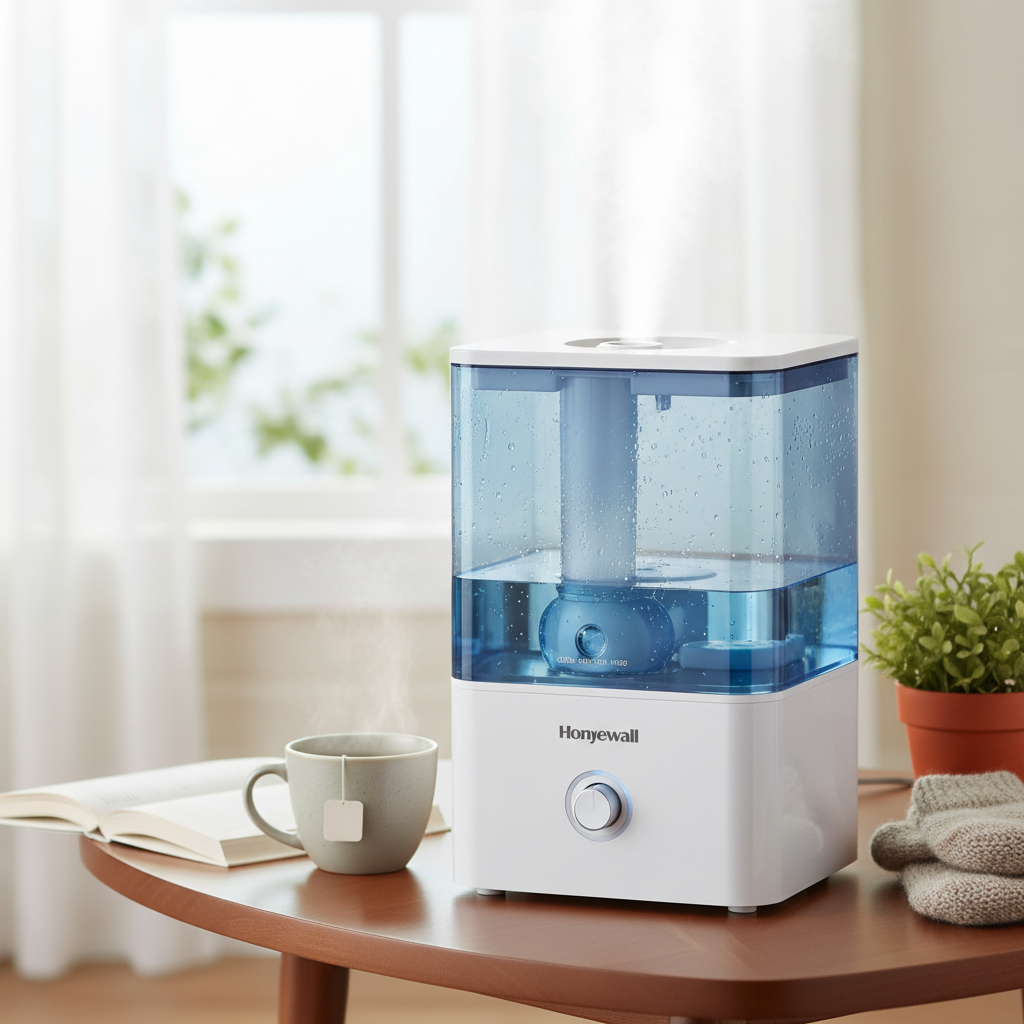
The crisp embrace of winter or the dry hum of air conditioning can often bring unwelcome guests into our homes: chapped lips, itchy skin, static shocks, and that persistent tickle in your throat. These are classic signs of low indoor humidity, a common issue many homeowners face. While humidifiers offer a simple yet effective solution, choosing the right one can feel overwhelming with the myriad of options available. This comprehensive review focuses on a perennial favorite, the Honeywell HCM-350 Germ Free Cool Mist Humidifier, to help you determine if it’s the optimal solution for creating a healthier, more comfortable living space.
What is a Humidifier? Why Do You Need One?
A humidifier is an appliance designed to add moisture, or humidity, to the air. Beyond just comfort, maintaining an optimal indoor humidity level (ideally between 40-60%) offers a wealth of health and environmental benefits. Adequate humidity can soothe dry nasal passages and sore throats, reduce the severity of cold and flu symptoms, and alleviate dry, itchy skin and eyes. For those with allergies or asthma, proper humidity can also help manage symptoms. Beyond personal well-being, humidifiers protect your home by preventing wooden furniture, floors, and musical instruments from drying out and cracking, preserving their integrity and appearance.
The market offers several types of humidifiers, each with distinct mechanisms and advantages. These typically include evaporative, ultrasonic, and steam vaporizers. The Honeywell HCM-350 falls into the evaporative cool mist category, renowned for its natural approach to humidification, which also includes a specialized “germ-free” feature designed to enhance the purity of the moisture it releases into your home.
Popular Humidifier Types: Pros and Cons
Understanding the different types of humidifiers is crucial for selecting a model that aligns with your specific needs and preferences. While the Honeywell HCM-350 is an evaporative cool mist unit, it’s helpful to see how it compares to other common technologies.
Evaporative Humidifiers (The Honeywell HCM-350’s Mechanism)
Evaporative humidifiers operate by drawing dry air into the unit using a fan, passing it over a saturated wicking filter. As the air moves over the wet filter, water naturally evaporates into an invisible cool mist, which is then dispersed into the room.
- Pros:
- Self-Regulating: They naturally stop adding moisture once the air reaches a certain saturation point, preventing over-humidification and potential mold growth.
- No White Dust: Unlike some ultrasonic models, evaporative humidifiers do not release mineral dust into the air, as minerals are typically trapped in the wicking filter.
- Energy Efficient: While they use a fan, the humidification process itself relies on natural evaporation, which can be less energy-intensive than boiling water.
- Safe Cool Mist: Produces cool, invisible moisture, eliminating any risk of burns, making them ideal for children’s rooms.
- Germ-Free (HCM-350 Specific): The Honeywell HCM-350 incorporates both a wicking filter and a UV light. The UV light helps kill up to 99.9% of bacteria, mold, and spores in the water before it’s released, ensuring a cleaner, healthier mist.
- Cons:
- Filter Replacement: Requires regular replacement of wicking filters, adding to ongoing operational costs and maintenance.
- Fan Noise: The fan can produce a noticeable “white noise,” which some users find soothing, while others may find it disruptive, especially on higher settings.
|
Our Picks for the Best Humidifier in 2026
As an Amazon Associate I earn from qualifying purchases.
|
||
| Num | Product | Action |
|---|---|---|
| 1 | LEVOIT Top Fill Humidifiers for Bedroom, 2.5L Tank for Large Room, Easy to Fill & Clean, 28dB Quiet Cool Mist Air Humidifier for Home Baby Nursery & Plants, Auto Shut-off for Safety, 25H |

|
| 2 | BREEZOME 6L Humidifiers for Bedroom Large Room & Essential Oil Diffuser, Ultrasonic Top Fill Cool Mist Humidifiers for Baby, Plants, Nursery Last up to 60 Hours, Smart Humidistat Control, Quiet, Black |
|
| 3 | LEVOIT Humidifiers for Bedroom Large Room Home, (6L) Cool Mist Top Fill Essential Oil Diffuser for Baby & Plants, Smart App & Voice Control, Rapid Humidification & Auto Mode - Quiet Sleep Mode, Gray |
|
| 4 | LEVOIT - Humidifiers for Bedroom - Quiet (3L Water Tank) - Cool Mist/Top Fill/Essential Oil Diffuser/25Watt - Home/Large Room - 360° Nozzle - Rapid Ultrasonic Humidification for Baby Nursery/Plant |
|
| 5 | MegaWise Topfill 7-colour Night light humidifier for Kid bedroom with 3.5L Large Capacity, No leakage Design Fine Mist Output Auto Shutoff, Essential Oil Safe Tank |
|
| 6 | Dreo Humidifiers for Bedroom, 4L Top Fill for Large Room, 36H Runtime, 28 dB Quiet Supersized Cool Mist Air Humidifier for Baby Nursery, Plants, Indoor, Night Light, Easy to Clean & Fill, White |
|
| 7 | Humidifiers for Bedroom Large Room with 7L/1.85Gal Large Humidifier, Smart App & Remote Control, 4 Mist Levels Large Room Humidifiers for Home Midnight |
|
| 8 | Homvana Humidifiers for Bedroom Home, 3.6 L Cool Mist Top-Fill 34H Super Long Time, Quiet 23dB, Baby Humidifier, Oil Diffuser for Large Room, House, Plant, Nursery, Office, BPA FREE, Ultrasonic (Grey) |
|
| 9 | BOXING 3L Cool Mist Humidifiers, Ultra Quiet 20dB for Bedroom, Baby & Office, Top Fill Air Humidifier for Large Room Home & Indoor Plants, 30H Runtime, Essential Oil Tray, Night Light, BPA-Free, White |
|
| 10 | Dreo Smart Humidifiers for Bedroom, Top Fill 4L Supersized Humidifier Large Room with 28 dB, 36H Runtime, Touch/APP/Voice Control, Nightlight, Cool Mist Humidifiers for Baby, Plants, Indoor, Black |
|
Ultrasonic Humidifiers
These humidifiers use high-frequency vibrations to create an ultra-fine, visible cool mist that is then quietly dispersed into the room.
- Pros:
- Quiet Operation: Generally much quieter than evaporative models due to the absence of a fan for air movement.
- No Filter Needed (Often): Many ultrasonic humidifiers are filter-free, reducing ongoing costs.
- Visible Mist: The visible mist output can be aesthetically pleasing and provides immediate visual confirmation of operation.
- Cons:
- White Dust: If using hard tap water, minerals can be aerosolized and dispersed as “white dust,” which settles on surfaces. This necessitates using distilled water or a demineralization cartridge.
- Potential for Over-Humidification: Without a built-in humidistat, they can potentially over-humidify a room if left unchecked.
- Cleaning Challenges: Intricate designs can sometimes make thorough cleaning more challenging, increasing the risk of mold and bacteria if not maintained diligently.
Steam Vaporizers
Steam vaporizers work by boiling water to create a warm, sterile steam that is released into the air.
- Pros:
- Germ-Killing: The boiling process effectively kills most bacteria and viruses in the water.
- Good for Congestion: The warm mist can be particularly soothing for respiratory issues like colds, coughs, and congestion.
- Cons:
- Burn Risk: The hot steam poses a burn hazard, making them less suitable for homes with children or pets.
- Higher Energy Consumption: Boiling water requires more electricity compared to other humidifier types.
- Mineral Buildup: Can develop significant mineral buildup (scale) that requires frequent cleaning.
Comparison Table: Humidifier Types at a Glance
| Feature | Evaporative (e.g., Honeywell HCM-350) | Ultrasonic | Steam Vaporizer |
|---|---|---|---|
| Mist Type | Cool, Invisible | Cool (or Warm), Visible | Warm, Visible |
| Germ Control | Filter + UV (HCM-350) / Filter only | Some include UV, often none | Boiling sterilizes water |
| White Dust | Generally none (minerals trapped) | Common with tap water | Generally none |
| Filters | Required (wicking filter) | Optional (demineralization cartridge) | Generally none |
| Noise Level | Moderate (fan noise) | Very quiet | Quiet (some gurgling/boiling sounds) |
| Safety (Burn) | Very Low | Very Low | High (hot water/steam) |
| Energy Use | Moderate | Low | High |
| Cleaning | Regular filter/tank cleaning, some dishwasher safe | Regular tank/transducer cleaning | Regular descaling required, hot water residue |
| Over-Humidification | Self-regulating, unlikely | Possible without humidistat | Possible without humidistat |
Honeywell HCM-350 Germ Free Cool Mist: A Deep Dive
The Honeywell HCM-350 Germ Free Cool Mist Humidifier stands out as a reliable and user-friendly choice, particularly for those prioritizing clean moisture and easy maintenance. This evaporative model is engineered to provide comfort without the common drawbacks found in other humidifier types.
Performance and Room Size
Designed primarily for medium-sized rooms, the HCM-350 efficiently adds invisible moisture to spaces up to approximately 400 square feet. In testing, it has been shown to rapidly increase humidity levels, reaching comfortable ranges (e.g., 45% humidity in a 150 sq ft room in about 34 minutes). With a 1.1-gallon water tank, this humidifier can run for up to 24 hours on its lowest setting, offering a full night’s (or day’s) worth of humidification before needing a refill. Its evaporative nature means it naturally adjusts to the room’s humidity, preventing excessive moisture.
Germ-Free Technology
One of the most compelling features of the HCM-350 is its “germ-free” operation. This isn’t just a marketing term; it refers to a dual-action system that ensures the moisture released is as clean as possible. Before the water reaches the wicking filter, it passes through a UV light. This built-in Ultraviolet (UV) technology helps kill up to 99.9% of bacteria, mold, and spores in the water. Coupled with the Protec antimicrobial treated wicking filter, which traps minerals and further inhibits the growth of mold and mildew within the filter itself, you can trust that the mist dispersed into your air is exceptionally pure.
Ease of Use
The HCM-350 is lauded for its straightforward design. It features a simple one-knob control with three fan speeds, allowing you to easily adjust the humidity output. The 1.1-gallon water tank boasts a wide opening and a convenient carrying handle, making refills a mess-free and effortless task. Users appreciate its intuitive setup and operation, allowing for immediate use right out of the box.
Design and Aesthetics
With its sleek, modern design, the Honeywell HCM-350 blends seamlessly into various home decors. It avoids distracting bright lights, a common complaint with many humidifiers, making it a good choice for bedrooms or nurseries where ambient light can be an issue for light sleepers. While it is designed for medium-sized rooms, its footprint is comparable to other units in its class, so it’s wise to consider placement in your desired space.
Cost Considerations
Retailing typically between $60 and $80, the Honeywell HCM-350 offers a mid-range price point for a feature-rich humidifier. However, it’s important to factor in the ongoing cost of replacement filters. The Honeywell HAC-504 Humidifier Replacement Filter A, often costing around $12, needs to be replaced every 30 to 60 days, depending on usage and water hardness. While this adds to the long-term operational cost, many users find the benefits of germ-free, white-dust-free humidification worth the investment.
Using and Maintaining Your Honeywell HCM-350
Proper use and consistent maintenance are key to maximizing the efficiency and lifespan of any humidifier, and the Honeywell HCM-350 is no exception. While its “germ-free” features are robust, regular cleaning ensures peak performance and prevents any potential buildup over time.
Setting Up Your Humidifier
Before its first use, place your HCM-350 on a firm, level, water-resistant surface at least six inches away from walls or furniture to allow for optimal air circulation. Remove the water tank and the upper enclosure, then take out the wicking filter. Fill the tank with cool tap water and thoroughly wet the filter under running water, ensuring it’s fully saturated without wringing. Reassemble the unit, plug it in, and select your desired fan speed. Remember, as an evaporative humidifier, it produces an invisible mist, so you won’t see a visible plume of vapor.
Routine Maintenance
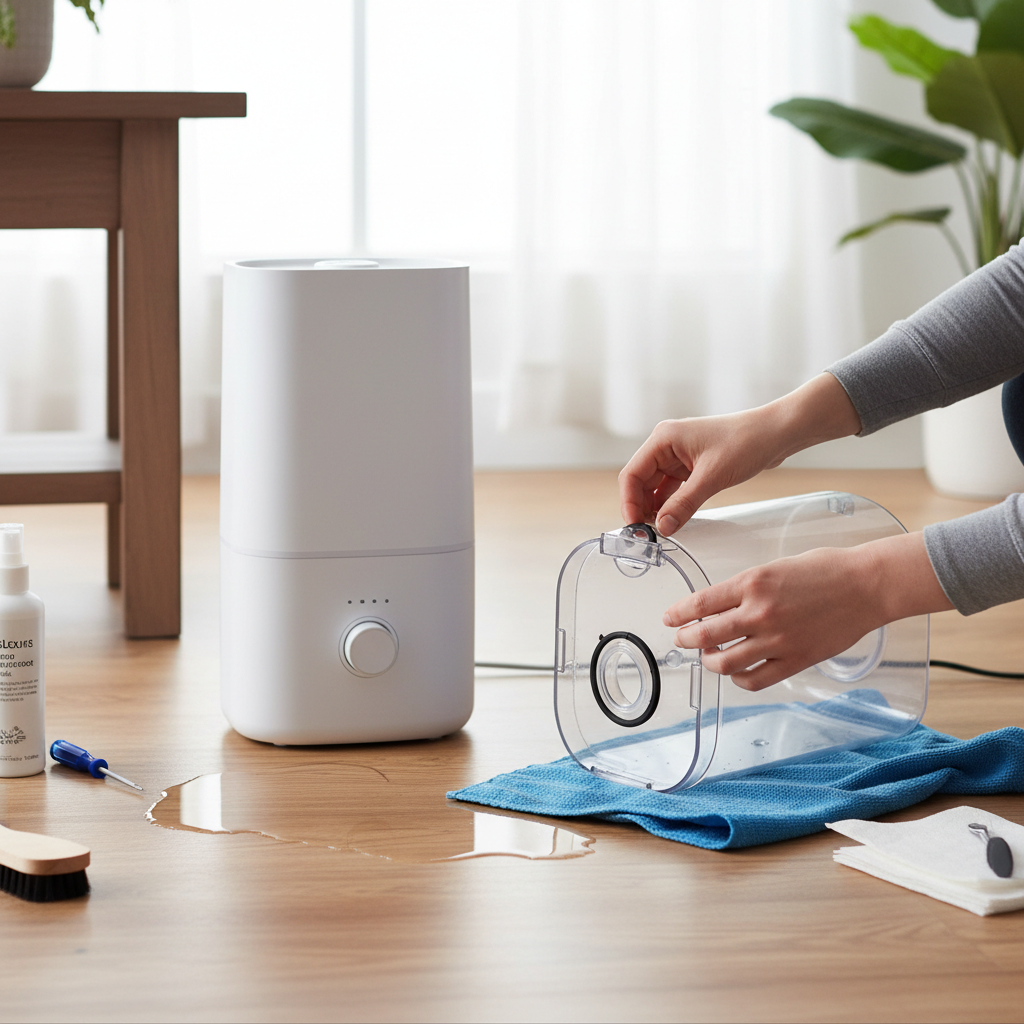
Honeywell recommends descaling and disinfecting your humidifier on a weekly basis. This prevents mineral buildup and ensures the system operates efficiently and cleanly.
- Descaling: Turn off and unplug the unit. Remove the water tank, empty any remaining water, and lift off the upper enclosure and filter. Wipe down the base, tank cap, and tank with white vinegar. Rinse all components thoroughly to remove vinegar residue.
- Disinfecting: After descaling, you can disinfect the tank and tray using a solution of one teaspoon of bleach per gallon of cool water, wiping the surfaces and rinsing thoroughly until the bleach smell dissipates.
The Dishwasher Advantage
A standout feature that simplifies maintenance for the HCM-350 is that several key components are top-rack dishwasher safe. This includes the water tank (excluding the cap) and the water tray. This significantly reduces the manual effort typically associated with humidifier cleaning, making it one of the easiest humidifiers to keep pristine. When using the dishwasher, avoid detergents and opt for a light cycle to protect the plastic components.
Filter Care
The wicking filter is crucial for the HCM-350’s performance and “germ-free” operation. It needs to be replaced every 30 to 60 days, or more frequently if you have hard water or notice a decrease in moisture output. You should also replace the filter if it becomes hard, crusty, brittle, or develops an odor. The Protec antimicrobial treatment helps prevent mold growth on the filter, but letting the filter dry completely if the unit won’t be used for an extended period is a good practice to further inhibit any microbial development.
Common Issues and Troubleshooting
- Decreased Moisture Output: Often indicates a clogged or old wicking filter. Replace the filter as recommended.
- Fan Noise: The HCM-350 uses a fan, so some level of “white noise” is normal, especially on higher settings. If you hear unusual clicking, ensure the filter is correctly seated and not squished.
- Odor: A musty odor usually points to a need for thorough cleaning and possibly a filter replacement.
- No Visible Mist: This is normal for evaporative humidifiers. The moisture is invisible.
Common Questions About Humidifiers
Humidifiers, while beneficial, often come with a few common queries. Here are answers to some frequently asked questions, many of which are relevant to the Honeywell HCM-350.
Can I use essential oils with the Honeywell HCM-350?
No, the Honeywell HCM-350 is not designed for use with essential oils. Adding essential oils directly to the water tank can damage the unit’s components and void the warranty. If aromatherapy is a priority, consider a dedicated diffuser or a humidifier specifically designed for essential oil use.
How does an evaporative humidifier prevent white dust?
Evaporative humidifiers like the HCM-350 effectively prevent white dust by trapping minerals within their wicking filters. As water evaporates, the minerals are left behind in the filter material, rather than being released into the air as a fine powder, which can happen with some ultrasonic models.
What is the ideal humidity level for a home?
The ideal indoor humidity level for comfort and health generally falls between 40% and 60%. Maintaining this range helps alleviate dry air symptoms, prevents static electricity, and protects wood furnishings without promoting mold growth or condensation.
How often should I clean my humidifier?
For optimal performance and to maintain a healthy environment, your humidifier should be cleaned weekly. This routine cleaning prevents the buildup of minerals, bacteria, and mold, ensuring that the moisture released into your air remains pure. The Honeywell HCM-350’s dishwasher