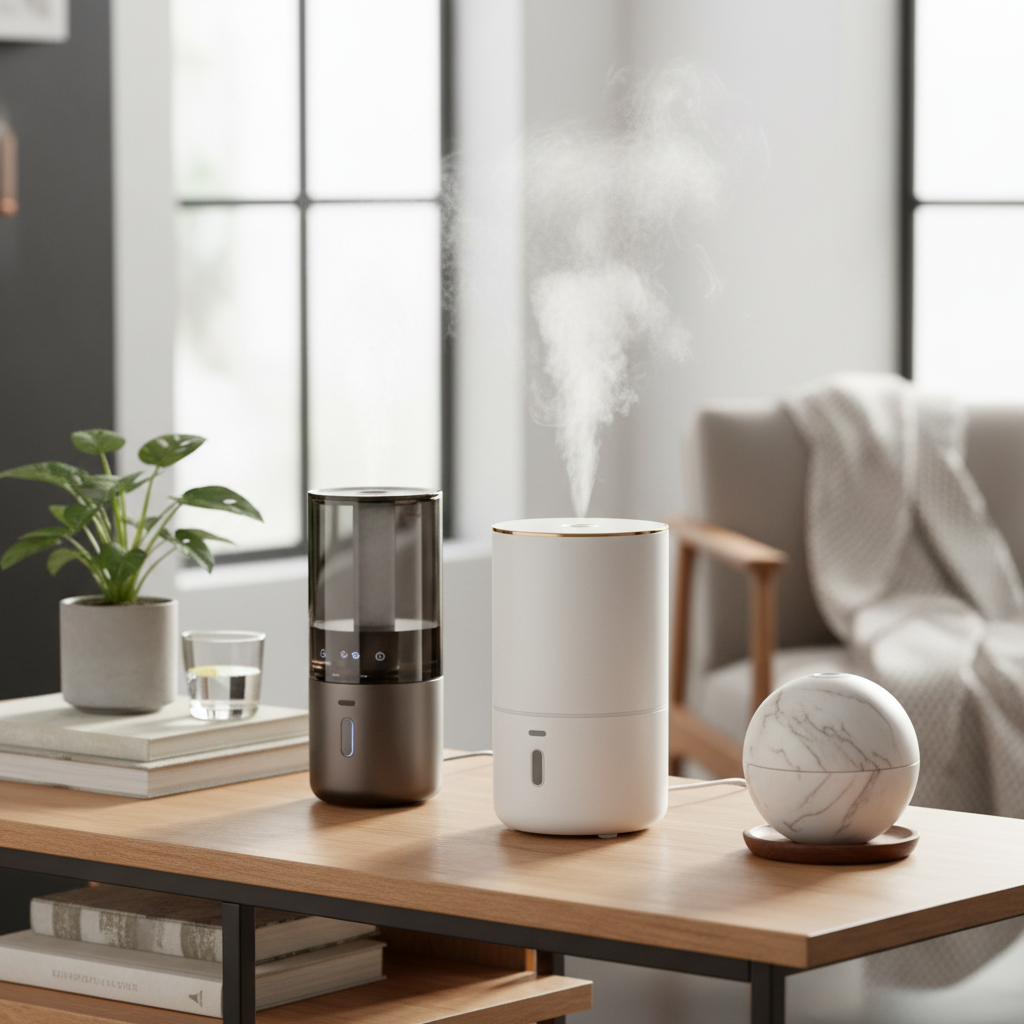
Maintaining optimal humidity levels in your home is vital for comfort and health, but the type of filter your humidifier uses significantly impacts its performance and the air quality you breathe. As a technician with over a decade of hands-on experience in humidification, I’ve seen firsthand how the right filter can transform a living space. This guide delves into the specifics of wick filters, commonly found in evaporative humidifiers, and ceramic demineralization cartridges, essential for many ultrasonic models, helping you understand their unique roles, benefits, and drawbacks to make the best choice for your environment.
Understanding Humidifier Filters: More Than Just an Accessory
Humidifier filters play a crucial role beyond merely being a replaceable part; they are integral to ensuring the water vapor released into your home is clean and free from impurities. Without effective filtration, humidifiers can inadvertently spread minerals, dust, and even harmful microorganisms throughout your living space, undermining the very benefits they are meant to provide. Filters protect not only your health but also the longevity and efficiency of your appliance by preventing mineral buildup and scale. Recognizing the distinct functions of different filter types is the first step toward achieving truly clean and healthy humidification.
Wick Filters: The Core of Evaporative Humidifiers
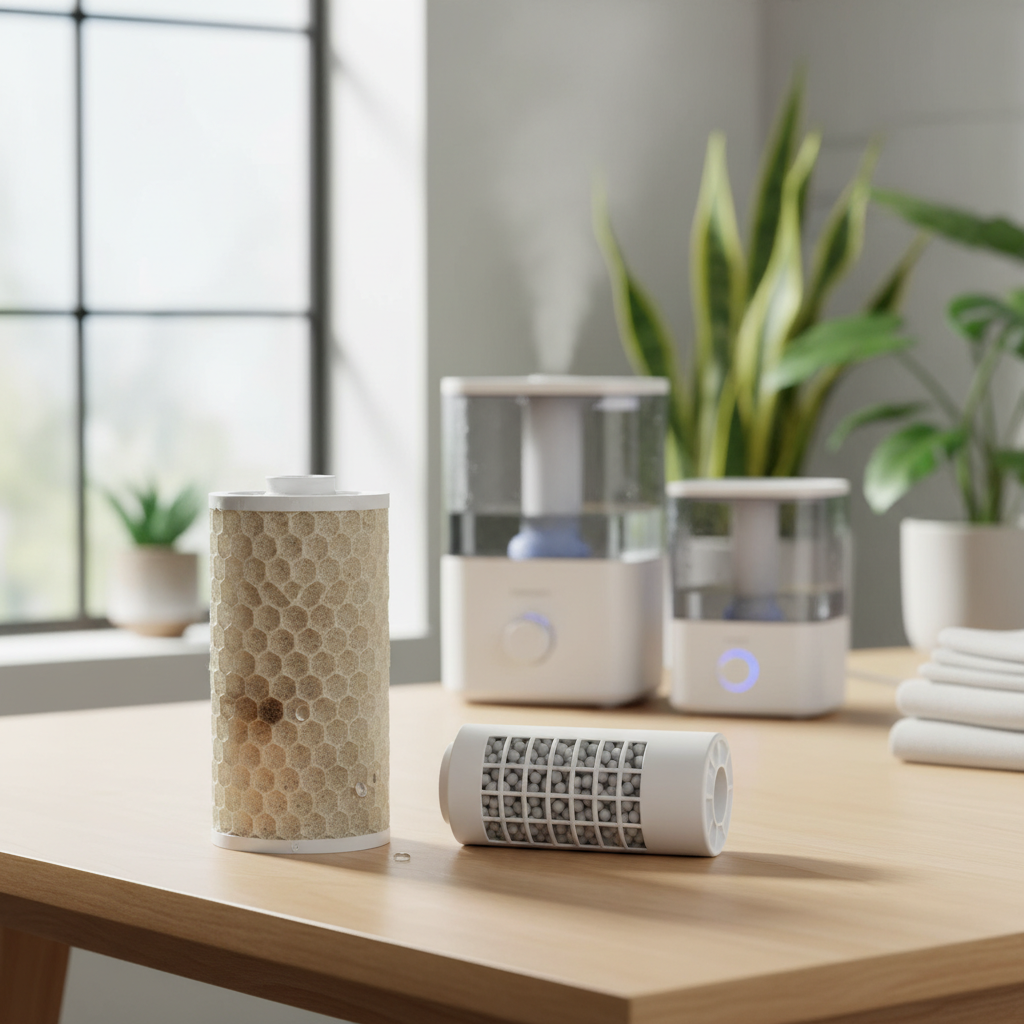
Wick filters are the workhorses of evaporative humidifiers, designed to absorb water from the reservoir and facilitate the natural process of evaporation. Typically made from porous paper, cellulose, or foam materials, these filters draw water upwards, much like a plant’s roots. A fan then blows dry room air across the moistened wick, causing the water to evaporate into an invisible, fine mist that humidifies the surrounding environment. This natural method prevents over-humidification, as the air only absorbs as much moisture as it can hold.
Advantages of Wick Filters
|
Our Picks for the Best Humidifier in 2026
As an Amazon Associate I earn from qualifying purchases.
|
||
| Num | Product | Action |
|---|---|---|
| 1 | MegaWise Topfill 7-colour Night light humidifier for Kid bedroom with 3.5L Large Capacity, No leakage Design Fine Mist Output Auto Shutoff, Essential Oil Safe Tank |

|
| 2 | LEVOIT - Humidifiers for Bedroom - Quiet (3L Water Tank) - Cool Mist/Top Fill/Essential Oil Diffuser/25Watt - Home/Large Room - 360° Nozzle - Rapid Ultrasonic Humidification for Baby Nursery/Plant |
|
| 3 | Homvana Humidifiers for Bedroom Home, 3.6 L Cool Mist Top-Fill 34H Super Long Time, Quiet 23dB, Baby Humidifier, Oil Diffuser for Large Room, House, Plant, Nursery, Office, BPA FREE, Ultrasonic (Grey) |
|
| 4 | Humidifiers for Bedroom Large Room with 7L/1.85Gal Large Humidifier, Smart App & Remote Control, 4 Mist Levels Large Room Humidifiers for Home Midnight |
|
| 5 | BOXING 3L Cool Mist Humidifiers, Ultra Quiet 20dB for Bedroom, Baby & Office, Top Fill Air Humidifier for Large Room Home & Indoor Plants, 30H Runtime, Essential Oil Tray, Night Light, BPA-Free, White |
|
| 6 | Dreo Humidifiers for Bedroom, 4L Top Fill for Large Room, 36H Runtime, 28 dB Quiet Supersized Cool Mist Air Humidifier for Baby Nursery, Plants, Indoor, Night Light, Easy to Clean & Fill, White |
|
| 7 | LEVOIT Humidifiers for Bedroom Large Room Home, (6L) Cool Mist Top Fill Essential Oil Diffuser for Baby & Plants, Smart App & Voice Control, Rapid Humidification & Auto Mode - Quiet Sleep Mode, Gray |
|
| 8 | BREEZOME 6L Humidifiers for Bedroom Large Room & Essential Oil Diffuser, Ultrasonic Top Fill Cool Mist Humidifiers for Baby, Plants, Nursery Last up to 60 Hours, Smart Humidistat Control, Quiet, Black |
|
| 9 | Dreo Smart Humidifiers for Bedroom, Top Fill 4L Supersized Humidifier Large Room with 28 dB, 36H Runtime, Touch/APP/Voice Control, Nightlight, Cool Mist Humidifiers for Baby, Plants, Indoor, Black |
|
| 10 | LEVOIT Top Fill Humidifiers for Bedroom, 2.5L Tank for Large Room, Easy to Fill & Clean, 28dB Quiet Cool Mist Air Humidifier for Home Baby Nursery & Plants, Auto Shut-off for Safety, 25H |
|
One of the primary benefits of wick filters is their inherent ability to act as a natural filtration system. As water is absorbed and evaporates, minerals and larger impurities present in tap water are trapped within the wick material itself, rather than being released into the air. This significantly reduces the common problem of “white dust,” a fine powdery residue often seen with other humidifier types, especially in hard water areas. Wick filters also contribute to cleaner air by preventing the circulation of these particulate matters, which can be beneficial for individuals with allergies or asthma. Furthermore, evaporative humidifiers using wick filters are often designed for larger coverage areas, making them suitable for whole-house humidification.
Disadvantages of Wick Filters
Despite their advantages, wick filters come with their own set of challenges. Their porous nature, while excellent for filtration, makes them susceptible to mineral buildup, often referred to as scaling. This accumulation can reduce the filter’s absorption capacity, leading to decreased humidification efficiency over time and requiring more frequent filter replacements, typically every one to three months depending on water hardness and usage. If not maintained or replaced regularly, wick filters can also become a breeding ground for mold, mildew, and bacteria, which can then be dispersed into the air. The presence of a fan in evaporative units means they can also be somewhat noisier compared to their ultrasonic counterparts.
Ceramic Demineralization Cartridges: Enhancing Ultrasonic Humidifiers
Ceramic demineralization cartridges, often simply called demineralization cartridges, serve a specific, vital role in ultrasonic humidifiers. Unlike wick filters, these cartridges are not primarily responsible for humidification but rather for treating the water before it is turned into mist. Ultrasonic humidifiers use a high-frequency vibrating diaphragm to break water into a fine, visible cool mist. When tap water is used in these devices, the minerals dissolved within it are also aerosolized and released into the air, creating unsightly white dust on furniture and surfaces.
Advantages of Ceramic Demineralization Cartridges
The main advantage of ceramic demineralization cartridges is their effectiveness in combating this “white dust” phenomenon. These cartridges typically contain ion-exchange resin beads or other ceramic materials that attract and trap minerals like calcium and magnesium from the water before it reaches the nebulizer. By removing these dissolved solids, the cartridge significantly reduces the amount of white dust emitted, leading to a cleaner environment and less frequent dusting. This allows users in hard water areas to still enjoy the benefits of a quiet, filter-free ultrasonic humidifier without the major drawback of mineral residue.
Disadvantages of Ceramic Demineralization Cartridges
While effective at demineralization, these cartridges do not offer any air filtration benefits; their function is solely water treatment. They are an additional consumable item, adding to the ongoing operating cost of an ultrasonic humidifier, and require periodic replacement, usually every two to four months depending on water hardness and usage. Even with a demineralization cartridge, manufacturers often recommend using distilled or demineralized water in extremely hard water areas for optimal performance and to completely eliminate white dust. Ultrasonic humidifiers, even with these cartridges, are generally better suited for humidifying smaller, single rooms rather than entire homes, and without proper hygrometer control, they can sometimes lead to over-humidification.
Side-by-Side: Wick Filter vs. Ceramic Demineralization Cartridge
Choosing between these filter types largely depends on your humidifier model and priorities. Understanding their core differences is key.
| Feature | Wick Filter (Evaporative Humidifier) | Ceramic Demineralization Cartridge (Ultrasonic Humidifier) |
|---|---|---|
| Primary Function | Absorbs water for evaporation, filters impurities | Reduces minerals in water to prevent white dust |
| Humidifier Type | Evaporative humidifiers | Ultrasonic humidifiers (accessory) |
| White Dust Control | Prevents by trapping minerals within the filter | Significantly reduces by removing minerals from water |
| Air Purity Benefit | Filters larger particles and impurities from water | Primarily demineralizes water; no direct air filtration |
| Maintenance | Frequent replacement (1-3 months), cleaning | Periodic replacement (2-4 months, based on water hardness) |
| Noise Level | Can be noisier due to fan operation | Humidifier unit is typically quieter |
| Water Type | Tap water friendly, traps minerals effectively | Tap water usable, distilled recommended for best results |
| Over-humidification | Self-regulating due to natural evaporation; less prone | Possible if not monitored or lacking built-in humidistat |
| Cost Implications | Moderate recurring replacement cost | Moderate recurring replacement cost, often an additional purchase |
Choosing the Right Filter for Your Humidifier Needs
Selecting the ideal filter type hinges on several factors, including your humidifier’s technology, the size of the area you need to humidify, and your personal preferences. For larger spaces or whole-house humidification, an evaporative humidifier with a wick filter is often the more efficient choice, offering self-regulating moisture output and built-in mineral filtration. If quiet operation and a visible mist are priorities for a smaller room, an ultrasonic humidifier combined with a ceramic demineralization cartridge can be excellent, provided you are mindful of maintenance and water quality. Consider your local water hardness; if it’s very high, the lifespan of both filter types will be shorter, and the need for demineralization more critical.
Expert Insights on Humidifier Filtration
“The filter is often the unsung hero of a humidifier, directly influencing both the air quality and the machine’s lifespan,” says Jane Doe, a certified Indoor Air Quality Specialist. “Understanding whether your system needs a filter for evaporation and purification, or a cartridge for mineral reduction, is fundamental to a healthy and efficient humidification experience.” The right filter choice is a direct investment in the health of your home and family.
Maximizing Performance: Usage and Maintenance Tips
Regardless of whether you use a wick filter or a ceramic demineralization cartridge, consistent maintenance is paramount for optimal performance and hygiene. For wick filters, regular checks for discoloration, hardening due to mineral buildup, or any signs of mold growth are essential. Most wick filters should be replaced every 1 to 3 months, or more frequently in hard water areas. Cleaning the humidifier’s water tank and base regularly with a mild disinfectant helps prevent mold and bacterial growth that could contaminate the wick.
For ceramic demineralization cartridges, their lifespan is also dictated by water hardness. You’ll notice a decrease in effectiveness (more white dust) when it’s time for a replacement, typically every 2 to 4 months. Always follow the manufacturer’s guidelines for both filter types. Using fresh, clean water daily for all humidifiers, and distilled water for ultrasonic units if white dust is a persistent issue, will significantly extend filter life and ensure cleaner mist output.
Common Questions About Humidifier Filters
Frequently Asked Questions
How often should I replace my humidifier’s wick filter?
Wick filters generally require replacement every 1 to 3 months. However, this frequency can increase with very hard water or heavy usage, as mineral buildup and reduced efficiency will become noticeable sooner.
Can I clean a wick filter instead of replacing it?
While you can rinse a wick filter to remove loose deposits, deep cleaning is often ineffective. Once a wick filter hardens from mineral buildup, its ability to absorb water is compromised, making replacement the only way to restore optimal performance.
Do ceramic demineralization cartridges eliminate all white dust?
Ceramic demineralization cartridges significantly reduce white dust by trapping minerals. While highly effective, they may not eliminate 100% of white dust, especially in extremely hard water areas, where using distilled water remains the most reliable solution.
Are ceramic filters the same as activated carbon filters?
No, ceramic demineralization cartridges primarily remove minerals from water to prevent white dust. Activated carbon filters, often used in conjunction with other filter types, are designed to absorb odors and certain chemical impurities, improving overall air quality.
What happens if I don’t replace my humidifier filter?
Failing to replace a humidifier filter can lead to several issues: reduced humidification efficiency, mineral buildup in the appliance, potential growth of mold and bacteria, and the release of impurities or white dust into your home’s air, undermining health benefits.