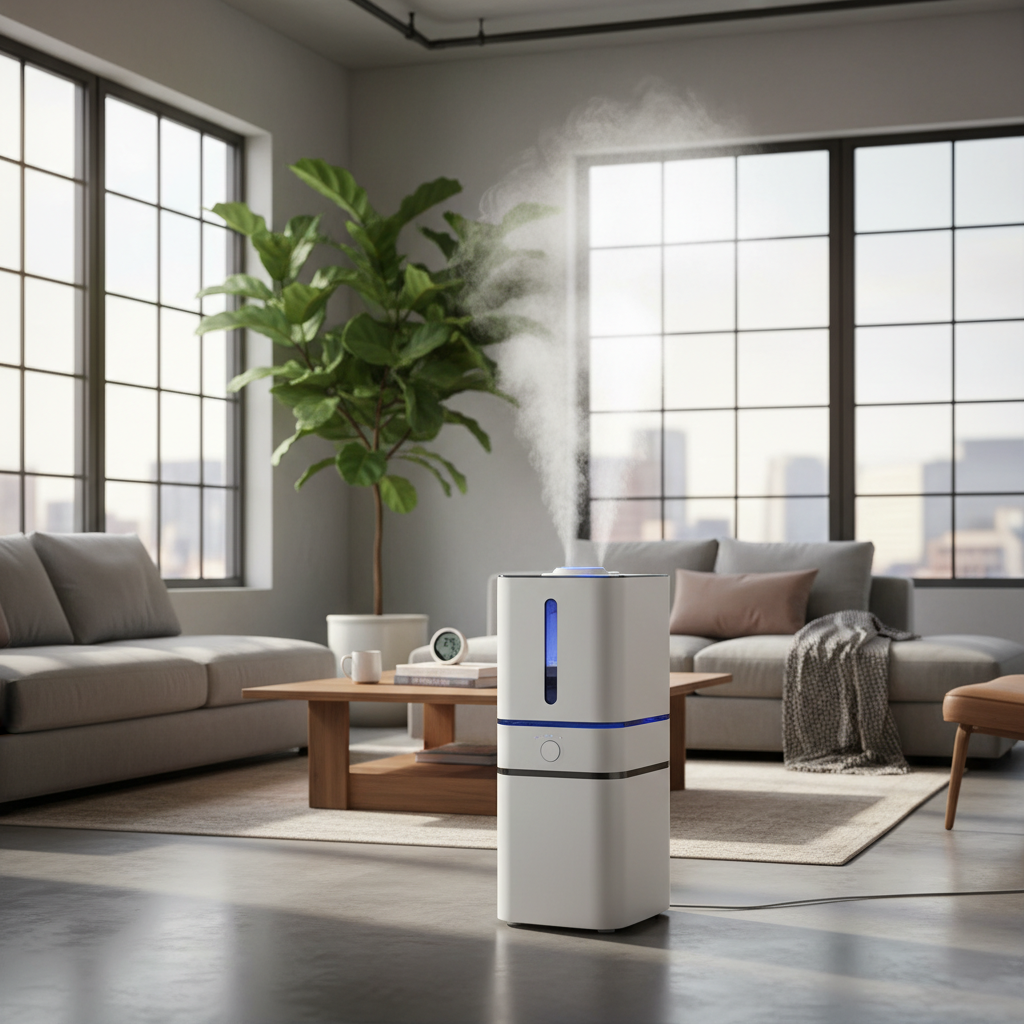
Stepping into a home suffering from dry air can feel like entering a desert. Cracked skin, persistent coughs, static shocks, and even damage to wooden furniture are tell-tale signs that your indoor environment is yearning for moisture. Humidifiers are the unsung heroes in these scenarios, working diligently to restore optimal humidity levels and bring comfort back into your living space. But with a myriad of options available, choosing the right humidifier—particularly when it comes to tank capacity—can be a daunting task. This guide will delve into the critical comparison between 4-liter (4L) and 6-liter (6L) tank capacities, helping you determine which size is the perfect fit for your unique needs.
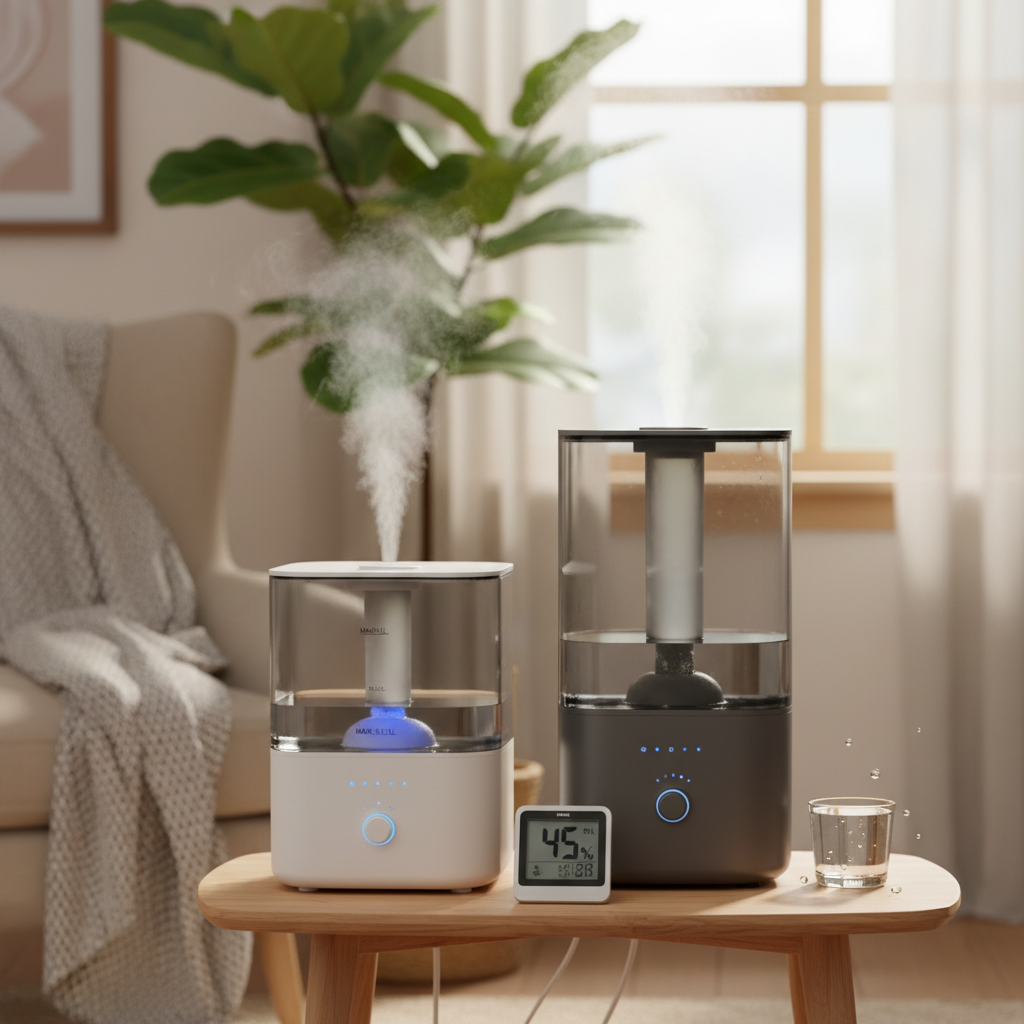
What is a Humidifier? Why Do You Need One?
At its core, a humidifier is an appliance designed to add moisture to the air, increasing relative humidity levels indoors. This simple function yields a wealth of benefits for your health and home. Medically, proper humidity (ideally between 30% and 50%) can alleviate symptoms of colds and flu, soothe dry throats and nasal passages, reduce skin dryness, and even improve sleep quality. For your home, it helps preserve wooden furniture and floors, keeps houseplants thriving, and minimizes static electricity. Whether it’s an ultrasonic model quietly emitting a fine mist or an evaporative unit using a fan and wick system, the goal remains the same: a more comfortable and healthier environment.
Understanding Humidifier Capacity: Beyond Just Liters
When discussing humidifier capacity, it’s crucial to distinguish between two key measurements: tank capacity and output capacity. Tank capacity, often measured in liters (L) or gallons, refers to the sheer volume of water the reservoir can hold. This directly impacts how long the unit can operate before needing a refill. Output capacity, typically measured in Gallons Per Day (GPD), indicates how much moisture the humidifier can release into the air over a 24-hour period. While tank size contributes to run time, GPD is a more direct indicator of a humidifier’s effectiveness for a given room size. For instance, a humidifier rated at 2.0 GPD is generally sufficient for spaces up to 500 square feet, while larger rooms up to 800 square feet might require a 3.0 GPD unit.
4L vs. 6L Humidifier Tank Capacity: A Direct Comparison
The choice between a 4L and 6L humidifier largely boils down to your specific needs regarding room size, desired runtime, and convenience. While both capacities offer effective humidification, their practical applications differ significantly.
4L Tank Humidifiers
A 4-liter tank is often considered a standard size for personal or small-to-medium room use.
-
Pros:
- Compact Footprint: These models are typically smaller and lighter, making them ideal for placement on nightstands, desks, or in nurseries where space is limited.
- Portability: Their manageable size makes them easier to move between rooms if needed.
- Lower Initial Cost: Generally, 4L models are more affordable, offering a cost-effective entry point into humidification.
- Suitable for Specific Areas: Perfect for a single bedroom, a small home office, or a baby’s nursery, providing targeted humidification without over-humidifying.
-
Cons:
- Shorter Runtime: A 4L tank typically provides a continuous mist for up to 32 hours, depending on the mist setting and ambient conditions. This often means daily or near-daily refilling, which can be inconvenient for continuous overnight use.
- Limited Room Coverage: While effective for smaller spaces, a 4L unit may struggle to adequately humidify larger rooms, leading to less consistent results.
|
Our Picks for the Best Humidifier in 2026
As an Amazon Associate I earn from qualifying purchases.
|
||
| Num | Product | Action |
|---|---|---|
| 1 | Homvana Humidifiers for Bedroom Home, 3.6 L Cool Mist Top-Fill 34H Super Long Time, Quiet 23dB, Baby Humidifier, Oil Diffuser for Large Room, House, Plant, Nursery, Office, BPA FREE, Ultrasonic (Grey) |

|
| 2 | LEVOIT - Humidifiers for Bedroom - Quiet (3L Water Tank) - Cool Mist/Top Fill/Essential Oil Diffuser/25Watt - Home/Large Room - 360° Nozzle - Rapid Ultrasonic Humidification for Baby Nursery/Plant |
|
| 3 | BOXING 3L Cool Mist Humidifiers, Ultra Quiet 20dB for Bedroom, Baby & Office, Top Fill Air Humidifier for Large Room Home & Indoor Plants, 30H Runtime, Essential Oil Tray, Night Light, BPA-Free, White |
|
| 4 | Dreo Smart Humidifiers for Bedroom, Top Fill 4L Supersized Humidifier Large Room with 28 dB, 36H Runtime, Touch/APP/Voice Control, Nightlight, Cool Mist Humidifiers for Baby, Plants, Indoor, Black |
|
| 5 | LEVOIT Humidifiers for Bedroom Large Room Home, (6L) Cool Mist Top Fill Essential Oil Diffuser for Baby & Plants, Smart App & Voice Control, Rapid Humidification & Auto Mode - Quiet Sleep Mode, Gray |
|
| 6 | BREEZOME 6L Humidifiers for Bedroom Large Room & Essential Oil Diffuser, Ultrasonic Top Fill Cool Mist Humidifiers for Baby, Plants, Nursery Last up to 60 Hours, Smart Humidistat Control, Quiet, Black |
|
| 7 | Dreo Humidifiers for Bedroom, 4L Top Fill for Large Room, 36H Runtime, 28 dB Quiet Supersized Cool Mist Air Humidifier for Baby Nursery, Plants, Indoor, Night Light, Easy to Clean & Fill, White |
|
| 8 | Humidifiers for Bedroom Large Room with 7L/1.85Gal Large Humidifier, Smart App & Remote Control, 4 Mist Levels Large Room Humidifiers for Home Midnight |
|
| 9 | LEVOIT Top Fill Humidifiers for Bedroom, 2.5L Tank for Large Room, Easy to Fill & Clean, 28dB Quiet Cool Mist Air Humidifier for Home Baby Nursery & Plants, Auto Shut-off for Safety, 25H |
|
| 10 | MegaWise Topfill 7-colour Night light humidifier for Kid bedroom with 3.5L Large Capacity, No leakage Design Fine Mist Output Auto Shutoff, Essential Oil Safe Tank |
|
6L Tank Humidifiers
Stepping up to a 6-liter tank offers enhanced performance and convenience, particularly for larger areas or those seeking extended operation.
-
Pros:
- Extended Runtime: The primary advantage of a 6L tank is its significantly longer operational time, often providing continuous mist for up to 60 hours on a full tank. This allows for multi-day use or uninterrupted overnight humidification without constant refilling.
- Ideal for Larger Spaces: A 6L humidifier is well-suited for master bedrooms, living rooms, open-plan areas, or even small apartments, offering more robust coverage.
- Less Frequent Refilling: The larger capacity drastically reduces the hassle of daily refills, offering greater convenience.
- Potential for Advanced Features: Many 6L models come equipped with smart features like remote control, app connectivity, built-in humidistats, or even warm mist options, enhancing user experience.
-
Cons:
- Larger Footprint: Due to the increased tank size, these units naturally take up more space and can be heavier when full, making them less portable.
- Higher Cost: Generally, 6L humidifiers come with a higher price tag, reflecting their increased capacity and often more advanced features.
- Potential for Over-Humidification: In very small rooms, a powerful 6L unit might over-humidify if not properly managed, potentially leading to condensation or mold growth.
Comparison Table: 4L vs. 6L Humidifier Tanks
| Feature | 4L Tank Humidifiers | 6L Tank Humidifiers |
|---|---|---|
| Typical Runtime | Up to 32 hours | Up to 60 hours |
| Room Size Suitability | Small to Medium Bedrooms, Offices, Nurseries | Large Bedrooms, Living Rooms, Open Plan Areas |
| Refill Frequency | Daily or every 1-2 days | Every 2-3 days or less frequently |
| Portability/Footprint | More compact, easier to move | Larger, heavier, less portable |
| Typical Features | Basic settings, manual controls | Often include humidistat, timer, remote, smart app |
| Price Range | Generally more affordable | Typically higher priced |
How to Choose the Right Humidifier Tank Capacity: Factors to Consider
Selecting the ideal humidifier involves more than just picking a tank size; it requires a holistic look at your environment and lifestyle.
Room Size & Layout
This is arguably the most critical factor. Measure the square footage of the room where the humidifier will primarily be used. Remember that ceiling height also plays a role, as moisture needs to fill the entire cubic volume of air. An open-plan living area will require a significantly larger capacity (and likely a 6L tank or even larger) than a confined bedroom. An undersized unit will run continuously without achieving desired humidity, while an oversized one can lead to excessive moisture.
Desired Runtime
Do you want the humidifier to run all night without interruption? Or do you need it to operate continuously for multiple days without attention? If uninterrupted sleep or minimal daily maintenance is a priority, a 6L tank offering longer run times is a clear winner. If you don’t mind refilling daily, a 4L might suffice.
Lifestyle & Convenience
Consider your daily routine. Are you someone who remembers to refill appliances daily, or do you prefer a “set it and forget it” approach? A larger tank capacity means fewer trips to the sink, which translates to greater convenience, especially for busy individuals or those who might struggle with lifting heavy tanks.
Budget & Features
Your budget will inevitably influence your choice. While 4L units are generally more budget-friendly, the added investment in a 6L model might be worthwhile for the convenience of extended runtime and potential advanced features. Decide which features (like an auto-shutoff humidistat, quiet operation, or smart controls) are non-negotiable for you.
Climate & Air Dryness
If you live in an extremely dry climate or during harsh winter months when heating systems strip moisture from the air, your home will require more consistent and powerful humidification. In such scenarios, a 6L tank can maintain optimal humidity more effectively and with less effort.
Beyond Tank Size: Important Humidifier Features
While tank capacity is key for convenience and runtime, other features significantly impact a humidifier’s effectiveness and ease of use:
- Adjustable Humidistat and Auto-Shutoff: Essential for maintaining a consistent relative humidity (RH) and preventing over-humidification. The unit turns on and off automatically as needed.
- Top-Fill Design: Simplifies refilling, making it less messy and more convenient than bottom-fill tanks.
- Quiet Operation: Especially important for bedrooms or offices. Ultrasonic humidifiers are often favored for their whisper-quiet performance.
- Aromatherapy Tray: Allows for the diffusion of essential oils, adding a pleasant scent to the humidified air (ensure it’s separate from the water tank).
- Easy Cleaning: Humidifiers require regular cleaning to prevent mold and bacteria growth. Look for wide tank openings or dishwasher-safe components.
Usage and Maintenance Tips for Optimal Performance
To get the most out of your humidifier and ensure its longevity, proper usage and maintenance are paramount.
- Use Distilled Water: While tap water can be used, distilled or demineralized water is highly recommended, especially for ultrasonic humidifiers. Tap water’s mineral content can lead to “white dust” residue on furniture and inside the machine, potentially impacting air quality and unit lifespan.
- Regular Cleaning: Clean your humidifier thoroughly every few days. Empty any leftover water daily. Disassemble the tank and base, and clean with a mild soap and water solution, or a vinegar solution to tackle mineral buildup. Regular cleaning prevents the growth of mold and bacteria, which can then be dispersed into your air.
- Optimal Placement: Position your humidifier on a flat, elevated surface at least three feet away from walls, electronics, and delicate furniture. This allows for proper mist dispersion and prevents moisture damage.
- Maintain Ideal RH: Aim for a relative humidity between 30% and 50%. Most modern humidifiers with humidistats will automatically maintain this, but you can also use a separate hygrometer to monitor levels. Levels above 60% can promote mold growth, while below 30% indicates overly dry air.
Conclusion
The decision between a 4L and 6L humidifier tank capacity ultimately hinges on a thoughtful evaluation of your living space, lifestyle, and humidification goals. A 4L unit is a stellar choice for compact areas, offering a space-saving design and effective humidification for personal zones like a single bedroom. Its lower cost and portability make it an accessible option for targeted relief from dry air. However, if you’re seeking extended run times, less frequent refills, and broader coverage for larger spaces such as a living room or a master bedroom, the 6L humidifier steps up as the more practical and convenient solution.
Both capacities serve the fundamental purpose of enhancing your indoor air quality and comfort. By considering the factors of room size, desired runtime, personal convenience, and budget, you can confidently select the humidifier that will transform your dry environment into a haven of healthy, comfortable air. Which capacity aligns best with your vision for a perfectly humidified home?
Frequently Asked Questions
How long does a 4L humidifier typically run?
A 4L humidifier generally runs for up to 32 hours on a full tank, though actual runtime can vary based on the mist intensity setting and the ambient humidity levels in your room.
Is a 6L humidifier too big for a bedroom?
A 6L humidifier is typically suitable for larger bedrooms, particularly master bedrooms, as it offers extended runtime and broader coverage. For very small bedrooms, a 4L unit might be more appropriate to avoid over-humidification.
Does a larger tank mean more powerful mist?
Not necessarily. Tank size primarily impacts runtime. The mist output (how much moisture is released) is determined by the humidifier’s GPD (Gallons Per Day) rating and its internal humidification technology, rather than just the tank capacity.
What is the ideal humidity level for a home?
The ideal relative humidity level for a home is generally between 30% and 50%. Maintaining humidity within this range helps prevent health issues associated with dry air and inhibits the growth of mold, dust mites, and bacteria.