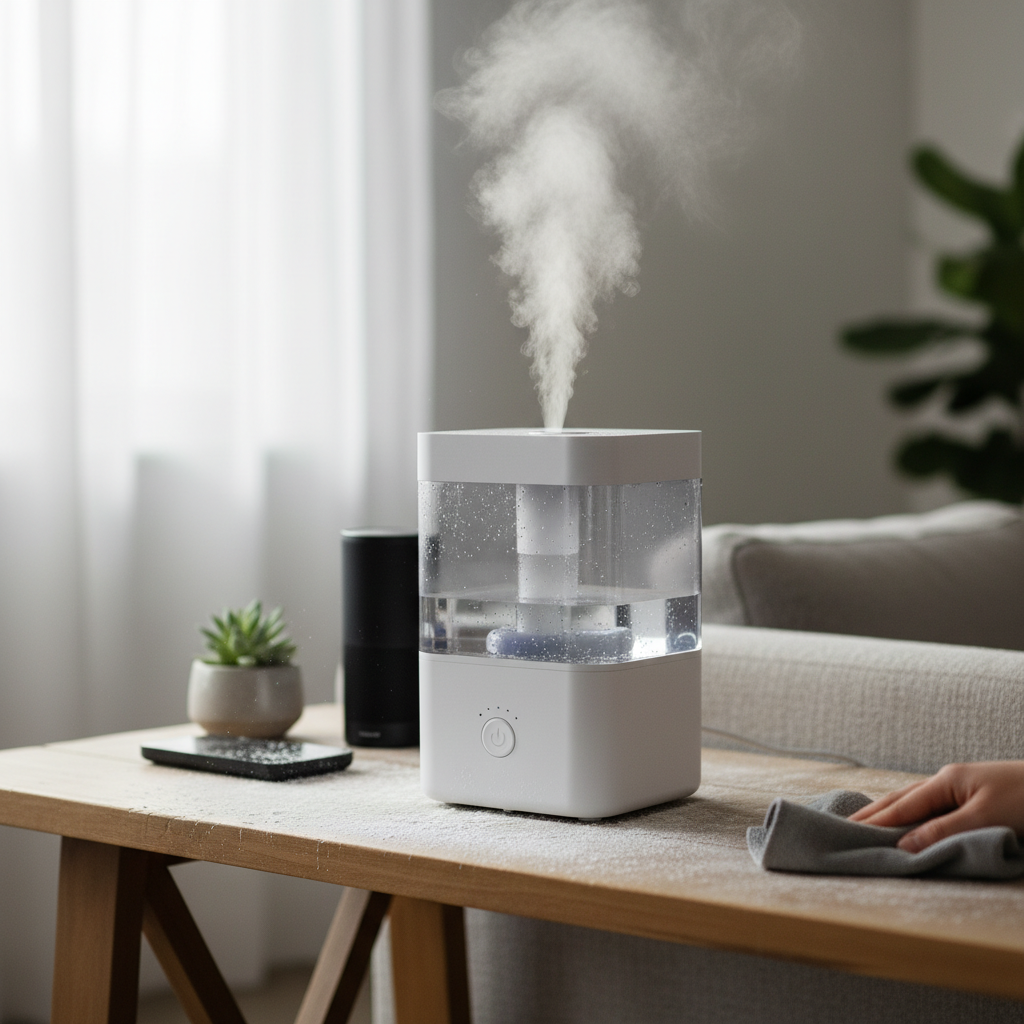
Have you ever noticed a fine white dust coating your furniture, electronics, or even plants, especially during the dry seasons when your humidifier is running? If you live in an area with hard water, this frustrating phenomenon is likely a familiar sight. While humidifiers are essential for improving indoor air quality and combating the discomfort of dry air, hard water can turn this beneficial appliance into a source of mineral mess and inefficiency. Choosing the right humidifier and adopting smart maintenance practices are crucial to enjoying healthy, clean air without the constant battle against mineral buildup.
What is Hard Water and How Does it Affect Your Humidifier?
Hard water is characterized by its high concentration of dissolved minerals, primarily calcium and magnesium. While these minerals are generally harmless for consumption, they pose significant challenges for appliances that process water, especially humidifiers. When hard water is used in a humidifier, these minerals can have several undesirable effects:
- White Dust: This is the most common and visible problem, particularly with ultrasonic humidifiers. As the humidifier atomizes water into a fine mist, the dissolved minerals are also released into the air. These microscopic mineral particles then settle as a white powdery residue on nearby surfaces, creating extra cleaning work and potentially affecting sensitive electronics.
- Mineral Buildup (Scale): Over time, minerals in hard water accumulate inside the humidifier’s tank, on heating elements, and within filters or wicks. This calcification, often referred to as scale, can significantly reduce the appliance’s efficiency, shorten its lifespan, and even lead to malfunction. Clogged filters cannot properly absorb water, and scaled heating elements require more energy to produce mist, increasing operating costs.
- Reduced Performance: As mineral deposits accumulate, the humidifier’s ability to effectively add moisture to the air diminishes. You might find yourself running the unit longer or at higher settings to achieve the desired humidity levels, only to be met with less effective results.
- Increased Maintenance: To combat mineral buildup and white dust, humidifiers used with hard water require much more frequent and rigorous cleaning. Neglecting this maintenance can lead to a breeding ground for bacteria and mold, further compromising air quality.
|
Our Picks for the Best Humidifier in 2026
As an Amazon Associate I earn from qualifying purchases.
|
||
| Num | Product | Action |
|---|---|---|
| 1 | Humidifiers for Bedroom Large Room with 7L/1.85Gal Large Humidifier, Smart App & Remote Control, 4 Mist Levels Large Room Humidifiers for Home Midnight |

|
| 2 | Dreo Humidifiers for Bedroom, 4L Top Fill for Large Room, 36H Runtime, 28 dB Quiet Supersized Cool Mist Air Humidifier for Baby Nursery, Plants, Indoor, Night Light, Easy to Clean & Fill, White |
|
| 3 | LEVOIT - Humidifiers for Bedroom - Quiet (3L Water Tank) - Cool Mist/Top Fill/Essential Oil Diffuser/25Watt - Home/Large Room - 360° Nozzle - Rapid Ultrasonic Humidification for Baby Nursery/Plant |
|
| 4 | MegaWise Topfill 7-colour Night light humidifier for Kid bedroom with 3.5L Large Capacity, No leakage Design Fine Mist Output Auto Shutoff, Essential Oil Safe Tank |
|
| 5 | LEVOIT Humidifiers for Bedroom Large Room Home, (6L) Cool Mist Top Fill Essential Oil Diffuser for Baby & Plants, Smart App & Voice Control, Rapid Humidification & Auto Mode - Quiet Sleep Mode, Gray |
|
| 6 | BREEZOME 6L Humidifiers for Bedroom Large Room & Essential Oil Diffuser, Ultrasonic Top Fill Cool Mist Humidifiers for Baby, Plants, Nursery Last up to 60 Hours, Smart Humidistat Control, Quiet, Black |
|
| 7 | LEVOIT Top Fill Humidifiers for Bedroom, 2.5L Tank for Large Room, Easy to Fill & Clean, 28dB Quiet Cool Mist Air Humidifier for Home Baby Nursery & Plants, Auto Shut-off for Safety, 25H |
|
| 8 | Dreo Smart Humidifiers for Bedroom, Top Fill 4L Supersized Humidifier Large Room with 28 dB, 36H Runtime, Touch/APP/Voice Control, Nightlight, Cool Mist Humidifiers for Baby, Plants, Indoor, Black |
|
| 9 | Homvana Humidifiers for Bedroom Home, 3.6 L Cool Mist Top-Fill 34H Super Long Time, Quiet 23dB, Baby Humidifier, Oil Diffuser for Large Room, House, Plant, Nursery, Office, BPA FREE, Ultrasonic (Grey) |
|
| 10 | BOXING 3L Cool Mist Humidifiers, Ultra Quiet 20dB for Bedroom, Baby & Office, Top Fill Air Humidifier for Large Room Home & Indoor Plants, 30H Runtime, Essential Oil Tray, Night Light, BPA-Free, White |
|
Understanding Humidifier Types: Which Ones Handle Hard Water Best?
The type of humidifier you choose plays a critical role in how well it handles hard water. Each technology interacts with minerals differently, impacting both performance and maintenance.
Evaporative Humidifiers
Evaporative humidifiers are often considered a strong contender for hard water areas. They operate by using a wicking filter submerged in a water reservoir. A fan then blows dry air over this moist wick, causing the water to naturally evaporate into the air.
- Pros for Hard Water: The primary advantage is that evaporative wicks effectively trap most of the minerals from hard water. This process prevents the release of mineral particles into the air, significantly reducing or eliminating the dreaded white dust on surfaces.
- Cons for Hard Water: While they mitigate white dust, the minerals still accumulate on the wick itself, causing it to harden and become less efficient over time. This necessitates frequent wick replacement (often every 1-3 months, depending on water hardness and usage) and regular cleaning of the water tank to remove settled mineral deposits. They can also be bulkier and sometimes louder due to the fan.
Ultrasonic Humidifiers
Ultrasonic humidifiers use a rapidly vibrating ceramic diaphragm to convert water into an ultrafine, cool mist, which is then dispersed into the room. They are known for their quiet operation and energy efficiency.
- Cons for Hard Water: This type is particularly prone to the “white dust” problem when used with hard water. Since the water is atomized, not evaporated, any dissolved minerals in the water are also released into the air and settle on everything. This can be irritating for allergies and simply messy.
- Pros for Hard Water (with caveats): If you’re set on an ultrasonic model, solutions exist. Many come with demineralization cartridges designed to filter out minerals from hard water before the mist is produced. Using distilled or demineralized water exclusively is another highly effective, albeit more costly, way to prevent white dust. When properly managed, they offer silent operation and efficient humidification.
Steam Vaporizers (Warm Mist Humidifiers)
Steam vaporizers, also known as warm mist humidifiers, work by heating water to boiling temperatures to create steam, which is then released into the air.
- Cons for Hard Water: These humidifiers are highly susceptible to rapid mineral buildup on their heating elements. The boiling process concentrates minerals, leading to thick scale deposits that reduce efficiency, can damage the unit, and may even pose a fire hazard if not regularly descaled.
- Pros: The boiling action kills most bacteria and molds in the water before it’s released, offering a hygienic mist. However, the energy consumption can be higher, and there’s a risk of burns from the hot steam. Using distilled water is strongly recommended to minimize scale buildup.
Impeller Humidifiers
Impeller humidifiers, a type of cool mist humidifier, use a rapidly rotating disc to break water into tiny droplets, which a diffuser then releases into the air.
- Pros: They are generally safe as they don’t use heat.
- Cons for Hard Water: Similar to ultrasonic models, impeller humidifiers can produce white dust if used with hard tap water because they disperse the minerals along with the water droplets. Their humidification efficiency can also be lower compared to other types.
Comparison Table: Humidifiers & Hard Water Compatibility
Understanding the nuances of each type can guide your decision. Here’s a quick comparison:
| Humidifier Type | Hard Water Performance | White Dust Production | Mineral Buildup Location | Maintenance Frequency | Recommended Water |
|---|---|---|---|---|---|
| Evaporative | Good (wicks trap minerals) | Low | On wick, in tank | Regular wick changes, tank cleaning | Tap water (with wick changes) |
| Ultrasonic | Poor (without accessories/treated water) | High | Low (in tank), dispersed into air | Frequent cleaning, demineralization cartridge replacement | Distilled/Demineralized (or with cartridge) |
| Steam Vaporizer | Very Poor (rapid scale) | None | On heating element | Very frequent descaling, tank cleaning | Distilled (highly recommended) |
| Impeller | Moderate (can produce dust) | Moderate | In tank | Regular cleaning | Distilled/Filtered |
Key Factors to Consider When Buying a Humidifier for Hard Water
Navigating the world of humidifiers with hard water requires a thoughtful approach. Here are the crucial factors to consider:
- Water Type & Filtration: This is paramount. If you choose an ultrasonic humidifier, prioritize models that include or offer compatible demineralization cartridges. Alternatively, be prepared to use distilled water, which is mineral-free. For evaporative models, assess the cost and availability of replacement wicks, as they will need frequent changing.
- Humidifier Type Preference: Based on the comparison above, evaporative humidifiers are generally more forgiving with hard tap water due to their mineral-trapping wicks, though they require wick replacement. If quiet operation is a top priority, an ultrasonic humidifier with a robust demineralization system or consistent use of distilled water is your best bet.
- Ease of Cleaning: Hard water dictates that your humidifier will need regular cleaning. Look for models with wide openings, removable components, and smooth surfaces that are easy to access and wipe down. Humidifiers with complex designs or many small crevices will quickly become a headache to maintain.
- Room Size & Coverage: Ensure the humidifier’s capacity matches the area you intend to humidify. A unit too small will struggle to reach desired humidity levels, while one too large might over-humidify.
- Budget: Consider not just the upfront cost of the humidifier but also the ongoing expenses. This includes the price of replacement wicks, demineralization cartridges, or the recurring cost of buying distilled water. These consumables can add up quickly, especially in hard water regions.
- Additional Features: While not directly related to hard water, features like an auto shut-off (when water runs low), a built-in humidistat (to maintain desired humidity levels), and quiet operation can enhance user experience.
Top Humidifiers for Hard Water Areas
Based on their design and features tailored to combat the challenges of hard water, here are some top recommendations:
- Honeywell HCM-350 Cool Mist Humidifier (Evaporative): This evaporative model is well-regarded for its ability to handle hard water without creating white dust. Its wicking filter captures minerals, and some models include UV technology to kill bacteria, ensuring a cleaner mist. Regular wick replacement is essential for optimal performance.
- Solenco Ultrasonic Top Filling Humidifier (Ultrasonic with Demineralization Cartridge): Specifically designed to address hard water issues, this ultrasonic humidifier comes standard with a demineralization cartridge. This cartridge effectively removes minerals from the water, preventing white dust and protecting the unit’s components, offering the quiet operation of an ultrasonic unit without the usual hard water drawbacks.
- Stylies Alaze Pro Evaporative Humidifier (Evaporative): This humidifier is often cited as an excellent choice for hard water areas. Its evaporative technology naturally traps minerals, delivering clean moisture into the air. Like other evaporative units, consistent filter maintenance is key to its effective operation.
When considering any humidifier, always check the manufacturer’s specific recommendations for water type and maintenance, especially if you live in a notoriously hard water region.
How to Use and Maintain Your Humidifier in Hard Water Areas
Effective use and meticulous maintenance are non-negotiable when dealing with hard water. Following these guidelines will maximize your humidifier’s lifespan and ensure healthy indoor air.
- Choose Your Water Wisely:
- Distilled or Demineralized Water: For ultrasonic and steam vaporizers, this is the gold standard. It eliminates mineral content entirely, preventing white dust and scale buildup. While it incurs a recurring cost, it significantly reduces cleaning effort and extends the unit’s life.
- Filtered Water: Some pitcher filters or whole-house filtration systems can reduce mineral content, making tap water more suitable. However, they may not remove all minerals, so monitor for residual buildup.
- Regular Cleaning Protocol: Regardless of the water you use, frequent cleaning is paramount. For hard water areas, aim to clean your humidifier every three days.
- Disassembly: Unplug the unit and disassemble all removable parts (tank, base, trays, filters/wicks).
- Descaling with Vinegar: Fill the water tank and base with undiluted white vinegar. Let it sit for at least 30 minutes to an hour, or longer for heavy buildup. The acidic nature of vinegar effectively dissolves mineral deposits.
- Scrubbing: Use a soft brush or sponge to gently scrub away any loosened mineral residue. For tight spots, a small bottle brush or an old toothbrush can be helpful.
- Rinsing: Rinse all components thoroughly under running water until the vinegar smell is gone and no residue remains.
- Sanitizing (Optional): For an extra layer of cleanliness, you can briefly rinse with a diluted bleach solution (e.g., 1 teaspoon of bleach per gallon of water) before a final thorough rinse. Ensure no bleach scent remains.
- Filter/Cartridge Replacement:
- Wicks: In evaporative humidifiers, replace wicks as soon as they become stiff, discolored, or show signs of heavy mineral crusting. This typically happens every 1-3 months with hard water.
- Demineralization Cartridges: Follow the manufacturer’s guidelines for replacing these cartridges in ultrasonic humidifiers, usually every 1-2 months, or when white dust reappears.
- Address Issues Promptly: If you notice reduced mist output, unusual noises, or increasing white dust, it’s a clear sign your humidifier needs immediate attention. Don’t wait for complete malfunction.
Frequently Asked Questions About Humidifiers and Hard Water
Does hard water damage humidifiers?
Yes, hard water can significantly damage humidifiers over time. The high mineral content leads to internal scale buildup, which clogs filters, coats heating elements, reduces efficiency, and can ultimately cause parts to fail prematurely.
What is white dust from a humidifier?
White dust is composed of tiny mineral particles (calcium, magnesium) that become airborne when hard water is atomized by ultrasonic or impeller humidifiers. These particles then settle on surfaces throughout your home.
Can I use tap water in any humidifier?
While you can technically use tap water in most humidifiers, it is generally not recommended for ultrasonic or steam vaporizer types if you have hard water, due to white dust and rapid mineral buildup. Evaporative humidifiers can use tap water, but require frequent wick changes.
How often should I clean my humidifier with hard water?
If you use hard tap water, it is recommended to clean your humidifier every three days to prevent heavy mineral buildup and the growth of bacteria or mold.
Are there filters that can soften hard water for humidifiers?
Yes, some ultrasonic humidifiers come with or can use demineralization cartridges designed to remove minerals. For evaporative types, their wicks act as a filter, trapping minerals. Using external water filters or purified water is also an option.
Conclusion
Navigating the world of humidification in hard water areas can be challenging, but with the right knowledge and tools, you can ensure your home enjoys balanced, healthy humidity without the mineral mess. Understanding the impact of hard water on different humidifier types—from the white dust of ultrasonics to the scale of steam vaporizers and the filter demands of evaporative models—empowers you to make an informed decision. Prioritizing models with effective filtration, a design conducive to easy cleaning, or the commitment to using distilled water are your best defenses. By integrating smart purchasing choices with diligent maintenance, you’ll transform your humidifier from a chore into a reliable ally for comfort and well-being.
Are you ready to embrace cleaner air and a healthier home, even with hard water? The perfect humidifier for your needs is waiting.