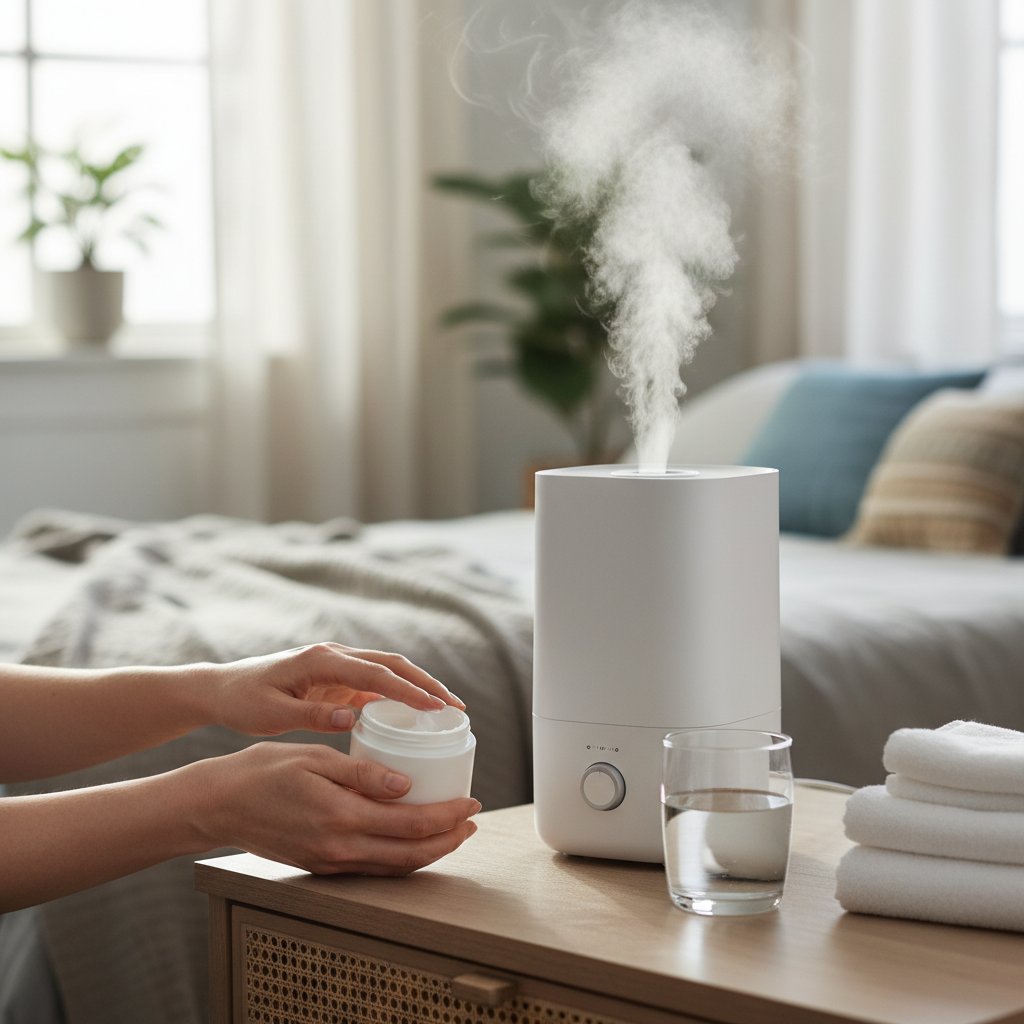
Do you often wake up to dry, itchy skin, or experience eczema flare-ups, especially during colder months or in air-conditioned environments? You’re not alone. When the air around you lacks moisture, your skin quickly loses its natural hydration, leading to discomfort and exacerbating conditions like eczema. The good news is that a quality humidifier can be a game-changer, acting as a silent guardian for your skin, infusing your living space with much-needed moisture.
This comprehensive guide, informed by extensive research and expert insights, will navigate the world of humidifiers. We’ll explore how these devices transform your indoor climate to benefit your skin, delve into the different types available, highlight crucial features to consider, and recommend top models specifically designed to bring relief to dry, sensitive, and eczema-prone skin. Let’s unlock the secrets to a more hydrated, comfortable you.
What is a Humidifier and Why Does Your Skin Need One?
A humidifier is an appliance that increases moisture levels in the air by converting water into vapor or mist. This simple yet effective process counteracts the drying effects of indoor heating and air conditioning, which often strip the air of essential humidity. Our skin’s outermost layer, the stratum corneum, serves as a vital barrier against environmental irritants and helps retain moisture. In dry conditions, this barrier can become compromised, leading to increased water loss, irritation, flakiness, and the worsening of inflammatory skin conditions such as eczema and psoriasis.
Using a humidifier helps replenish the moisture in your environment, allowing your skin to naturally absorb hydration. This leads to a multitude of benefits:
- Reduces Skin Dryness and Itching: By slowing transepidermal water loss (TEWL), humidifiers keep skin hydrated, preventing the cycle of dryness and subsequent itching and cracking.
- Supports Skin Barrier Repair: A balanced moisture environment strengthens your skin’s protective barrier, making it more resilient against irritants and allergens.
- Prevents Eczema Flare-Ups: Consistent humidity can significantly reduce the frequency and severity of eczema exacerbations.
- Enhances Topical Treatment Efficacy: When the air is adequately moist, moisturizers and other skincare products can penetrate deeper and work more effectively.
- Improves Sleep Quality: By alleviating nighttime itching and discomfort, humidifiers can contribute to more restful sleep for those with sensitive skin.
Optimal indoor humidity levels for skin health typically range between 40% and 60%. Maintaining this balance is key to ensuring your skin remains supple, comfortable, and less prone to irritation.
Exploring Popular Humidifier Types: Pros and Cons
Not all humidifiers are created equal, and understanding their differences is crucial for selecting the best one for sensitive skin and eczema.
Evaporative Humidifiers
- How They Work: These devices use a fan to draw air through a moist wick filter, which absorbs water from a reservoir. As air passes over the filter, water evaporates into the room as an invisible, cool mist.
- Pros:
- Energy Efficient: Generally use less electricity than warm mist models.
- Self-Regulating: They naturally stop adding moisture when the air reaches its saturation point, preventing over-humidification and mold growth.
- Safer: Emit a cool mist, eliminating burn risks associated with hot steam, making them ideal for households with children and pets.
- Cons:
- Filter Replacement: Require regular filter changes (typically every 1-2 months), which adds to ongoing costs and maintenance.
- Noise: The fan can produce a noticeable white noise.
- Effectiveness: May be less effective in very large rooms or if filters are clogged.
|
Our Picks for the Best Humidifier in 2026
As an Amazon Associate I earn from qualifying purchases.
|
||
| Num | Product | Action |
|---|---|---|
| 1 | Humidifiers for Bedroom Large Room with 7L/1.85Gal Large Humidifier, Smart App & Remote Control, 4 Mist Levels Large Room Humidifiers for Home Midnight |

|
| 2 | Dreo Smart Humidifiers for Bedroom, Top Fill 4L Supersized Humidifier Large Room with 28 dB, 36H Runtime, Touch/APP/Voice Control, Nightlight, Cool Mist Humidifiers for Baby, Plants, Indoor, Black |
|
| 3 | Dreo Humidifiers for Bedroom, 4L Top Fill for Large Room, 36H Runtime, 28 dB Quiet Supersized Cool Mist Air Humidifier for Baby Nursery, Plants, Indoor, Night Light, Easy to Clean & Fill, White |
|
| 4 | Homvana Humidifiers for Bedroom Home, 3.6 L Cool Mist Top-Fill 34H Super Long Time, Quiet 23dB, Baby Humidifier, Oil Diffuser for Large Room, House, Plant, Nursery, Office, BPA FREE, Ultrasonic (Grey) |
|
| 5 | MegaWise Topfill 7-colour Night light humidifier for Kid bedroom with 3.5L Large Capacity, No leakage Design Fine Mist Output Auto Shutoff, Essential Oil Safe Tank |
|
| 6 | LEVOIT - Humidifiers for Bedroom - Quiet (3L Water Tank) - Cool Mist/Top Fill/Essential Oil Diffuser/25Watt - Home/Large Room - 360° Nozzle - Rapid Ultrasonic Humidification for Baby Nursery/Plant |
|
| 7 | BREEZOME 6L Humidifiers for Bedroom Large Room & Essential Oil Diffuser, Ultrasonic Top Fill Cool Mist Humidifiers for Baby, Plants, Nursery Last up to 60 Hours, Smart Humidistat Control, Quiet, Black |
|
| 8 | LEVOIT Top Fill Humidifiers for Bedroom, 2.5L Tank for Large Room, Easy to Fill & Clean, 28dB Quiet Cool Mist Air Humidifier for Home Baby Nursery & Plants, Auto Shut-off for Safety, 25H |
|
| 9 | BOXING 3L Cool Mist Humidifiers, Ultra Quiet 20dB for Bedroom, Baby & Office, Top Fill Air Humidifier for Large Room Home & Indoor Plants, 30H Runtime, Essential Oil Tray, Night Light, BPA-Free, White |
|
| 10 | LEVOIT Humidifiers for Bedroom Large Room Home, (6L) Cool Mist Top Fill Essential Oil Diffuser for Baby & Plants, Smart App & Voice Control, Rapid Humidification & Auto Mode - Quiet Sleep Mode, Gray |
|
Ultrasonic Humidifiers
- How They Work: These humidifiers use high-frequency sound vibrations to break water into a fine, cool mist that is then silently dispersed into the air.
- Pros:
- Quiet Operation: Often the quietest type, making them excellent for bedrooms and nurseries.
- Filterless Options: Many models do not require filters, reducing maintenance.
- Fine Mist: Produce a very fine mist that quickly humidifies the air.
- Cons:
- “White Dust” Potential: If tap water with high mineral content is used, these humidifiers can release fine white mineral dust into the air, which can settle on surfaces and potentially irritate respiratory systems. Using distilled water can mitigate this.
- Over-humidification: Without a built-in humidistat, they can potentially over-humidify a room, creating conditions conducive to mold growth.
Warm Mist Humidifiers (Steam Vaporizers)
- How They Work: These units heat water to its boiling point, releasing a warm, sterile steam into the air.
- Pros:
- Germ-Free Mist: The boiling process kills most waterborne bacteria and molds, producing a clean mist.
- No White Dust: Do not produce white dust.
- Soothing for Respiratory Issues: Warm mist can be comforting for cold and flu symptoms.
- Cons:
- Burn Risk: The hot water and steam pose a burn hazard, making them unsuitable for homes with young children or pets.
- Energy Consumption: Tend to consume more electricity due to the heating element.
- Mineral Buildup: Can develop mineral buildup in the heating element, requiring frequent cleaning.
Impeller Humidifiers
- How They Work: These cool mist humidifiers use a high-speed rotating disc to fling water against a diffuser, breaking it into tiny droplets that float into the air.
- Pros:
- No Heating Element: Safer than warm mist humidifiers as they don’t produce hot water or steam.
- Generally Filterless: Often do not require filters.
- Cons:
- Noise: Can be noisy due to the spinning disc.
- Limited Coverage: Often less effective than evaporative or ultrasonic models for larger spaces.
- Dampness: Some older or less efficient models might produce larger droplets that can cause dampness around the unit.
Comprehensive Humidifier Comparison Table
| Feature | Evaporative Humidifier | Ultrasonic Humidifier | Warm Mist Humidifier | Impeller Humidifier |
|---|---|---|---|---|
| Mist Type | Cool, invisible | Cool, visible fine mist | Warm, visible steam | Cool, visible fine mist |
| Safety | Very safe (no heat/burn risk) | Very safe (no heat/burn risk) | Burn risk (hot water/steam) | Safe (no heat) |
| Noise Level | Moderate (fan noise) | Very quiet | Quiet (gentle bubbling) | Moderate to noisy |
| Maintenance | Regular filter changes, cleaning | Regular cleaning, distilled water advised | Frequent cleaning for mineral buildup | Regular cleaning |
| Filter Needs | Yes, wick filters | Often no filters | No filters | No filters |
| Energy Use | Low to Moderate | Low | High (heating element) | Low |
| White Dust | No | Yes (with hard water) | No | No |
| Cost | Moderate (plus filter costs) | Moderate to High | Low to Moderate | Low |
| Best For | Large rooms, preventing over-humidification | Bedrooms, quiet operation | Respiratory issues (colds), sterile mist | Small rooms, basic humidification |
Your Essential Buying Guide: Factors to Consider
Choosing the right humidifier for dry skin and eczema involves more than just picking a type. Here’s what to look for:
Room Size and Coverage Area
Humidifiers are rated for specific room sizes, typically in square feet. A small personal humidifier won’t effectively humidify a large living room.
- Small Rooms (up to 300 sq ft): Ideal for bedrooms, offices.
- Medium Rooms (300-500 sq ft): Suitable for master bedrooms or larger living areas.
- Large Rooms (over 500 sq ft) / Whole House: Necessary for open-plan spaces or if you want to humidify multiple areas.
Ensure the humidifier’s capacity matches your room to avoid insufficient humidification or over-humidifying a small space.
Desired Humidity Level
While 40-60% relative humidity is ideal for skin health, your personal comfort may vary. Look for a humidifier with a built-in humidistat and auto mode. A humidistat allows you to set a target humidity level, and the device will automatically turn on and off to maintain it. This prevents both under-humidification and excess moisture, which can lead to mold growth.
Budget Considerations
Humidifiers vary widely in price, from under $50 to several hundred dollars.
- Entry-Level: Basic models offering essential humidification.
- Mid-Range: Often include larger tanks, quiet operation, and some smart features.
- Premium: Feature advanced technologies like UV sterilization, smart connectivity, large coverage areas, and sophisticated designs.
Consider not just the initial cost, but also ongoing expenses like filters (for evaporative models) and energy consumption.
Essential and Advanced Features
- Cool Mist: As recommended by dermatologists for eczema and sensitive skin, always prioritize cool mist humidifiers for safety and comfort.
- Easy to Clean Design: This is paramount. A compromised skin barrier makes you more susceptible to infections. Humidifiers can harbor bacteria and mold if not cleaned regularly. Look for models with wide openings, detachable parts that are easy to scrub, and even dishwasher-safe components.
- Quiet Operation: For bedrooms, a whisper-quiet humidifier is essential for undisturbed sleep. Ultrasonic models are often the quietest.
- Large Tank Capacity & Long Run-time: Reduces the frequency of refills, especially convenient for overnight use.
- Top-Fill Design: Simplifies refilling the water tank without spills.
- Automatic Shut-off: A safety feature that turns the unit off when the water level is low.
- Timer: Allows you to set specific operating durations.
- Antimicrobial Filters or UV Technology: Some advanced models incorporate these to kill bacteria and prevent mold growth in the water tank.
- Smart Features: Wi-Fi connectivity, app control, and voice assistant compatibility offer convenience for monitoring and adjusting settings remotely.
Reputable Brands
While specific model recommendations will follow, some trusted brands known for quality humidifiers include Levoit, GENIANI, Canopy, Dreo, and Vornado. Researching user reviews and expert opinions for specific models within these brands can guide your decision.
Top Humidifiers for Soothing Dry Skin and Eczema
Based on expert recommendations and user feedback, here are some top-rated humidifiers that stand out for their effectiveness in managing dry skin and eczema:
- GENIANI Top Fill Cool Mist Humidifier: Praised by dermatologists for its high output and ease of cleaning. It features a smart sensor to maintain humidity levels and operates quietly. The large 6-liter tank provides extended runtime, making it suitable for medium to large rooms.
- Miro Completely Washable Humidifier: This innovative humidifier boasts a modular design where every component can be completely disassembled and washed, making it exceptionally sanitary—a significant advantage for those with very sensitive skin or mold allergies. It delivers a high-output cool mist.
- LEVOIT Smart Wi-Fi Cool Mist Essential Oil Humidifier (e.g., Levoit Classic 300S or LV600HH): A popular choice known for its quiet operation, large tank capacity (often up to 1.5 gallons or 6 liters for 40-60 hours of run time), and smart features like app and voice control. Many Levoit models offer a top-fill design for easy refills and are relatively easy to clean.
- raydrop Cool Mist Personal Humidifier: An affordable and compact ultrasonic option, excellent for smaller rooms or bedside use. It’s known for its quiet operation and ease of use, providing continuous cool mist for up to 9 hours.
- Canopy Humidifier: Features dishwasher-safe parts and uses Smart Persistent Airflow (SPA)™ technology to combat mold growth. It’s lauded for maintaining optimal moisture day and night with integrated sensors.
- Vornado Evap40 Evaporative Humidifier: An excellent choice for extra-large spaces, capable of humidifying areas up to 1,000 square feet. It features two high-capacity tanks and a smart humidistat to distribute moisture evenly. While larger, it’s a robust solution for whole-home humidification.
- Dreo Smart Humidifier (e.g., Dreo 713S): Often includes smart features like app control, large tanks, and the ability to produce both warm and cool mist (though cool mist is preferred for eczema). These models typically offer extended runtimes and efficient mist output.
Usage and Maintenance for Optimal Skin Relief
To maximize the benefits of your humidifier and ensure it remains a safe and effective tool for your skin health, proper usage and diligent maintenance are key.
How to Use Your Humidifier Effectively:
- Placement: Position your humidifier on a flat, water-resistant surface several feet away from your bed, walls, furniture, and electronics. This prevents moisture damage and allows for optimal mist dispersion.
- Water Type: Always use distilled water. Tap water contains minerals that can lead to “white dust” (fine mineral particles) from ultrasonic humidifiers and significant mineral buildup (scale) in all humidifier types. Mineral buildup can reduce efficiency, promote mold growth, and shorten the lifespan of your device.
- Humidity Monitoring: If your humidifier doesn’t have a built-in humidistat, consider purchasing a separate hygrometer to monitor your room’s humidity levels. Aim for 40-60% relative humidity.
- Runtime: Run your humidifier overnight, especially in the bedroom, as indoor air tends to be driest while you sleep. Dermatologists suggest turning it on about half an hour before bed to allow the air to adjust.
- Complementary Skincare: Remember that a humidifier is a complementary tool. Continue your regular skincare routine, especially applying fragrance-free moisturizers to damp skin to lock in hydration.
Essential Cleaning and Maintenance:
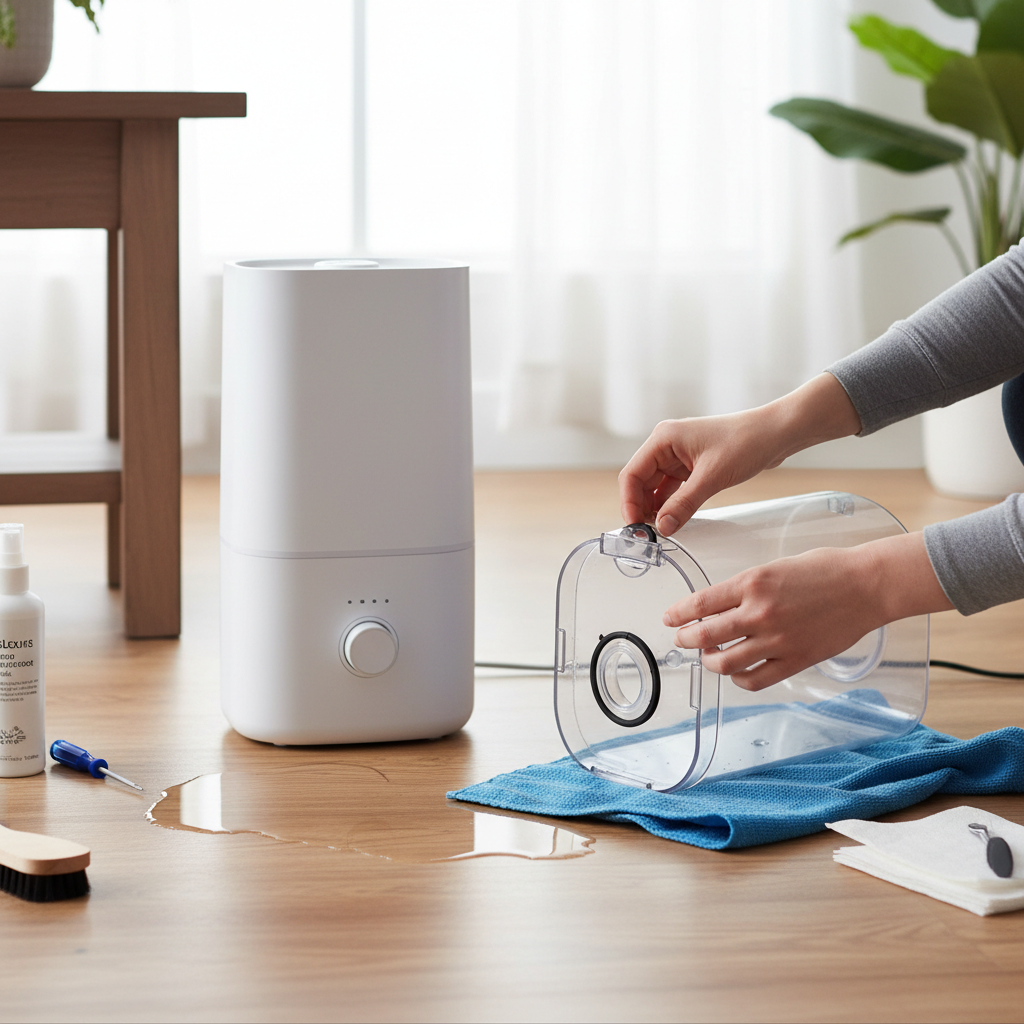
Regular cleaning is crucial to prevent the growth of mold, bacteria, and dust mites, which can exacerbate eczema, asthma, and lead to infections.
- Daily Maintenance: Empty the water tank daily and rinse it with fresh water. Allow parts to air dry before refilling.
- Weekly Deep Cleaning (or every 3 days as per EPA recommendations):
- Unplug: Always unplug the unit before cleaning.
- Disassemble: Take apart all removable components (tank, base, trays, filters).
- Clean with Vinegar: Fill the water tank halfway with white vinegar and let it sit for 30 minutes to an hour to loosen mineral deposits. Scrub any mineral buildup with a brush. For other parts, wipe with vinegar.
- Disinfect: For a more thorough disinfection, use a 3% hydrogen peroxide solution or a diluted bleach solution (one teaspoon of bleach per gallon of water). Fill the tank with the solution and let it sit for 30 minutes, then rinse thoroughly. For smaller parts, soak or wipe them down.
- Rinse Thoroughly: Rinse all components thoroughly with clean water multiple times to remove any vinegar or disinfectant residue.
- Dry: Allow all parts to air dry completely before reassembling and refilling.
- Filter Replacement (for evaporative models): Replace wick filters as recommended by the manufacturer, typically every 1-2 months, or sooner if they appear discolored or hardened.
Common Humidifier Issues and Troubleshooting:
- White Dust: Use distilled water. If using tap water, consider a demineralization cartridge if available for your model.
- Mold/Musty Smell: This is a sign of insufficient cleaning. Immediately deep clean the unit as described above.
- Unit Not Misting: Check water levels, ensure all parts are correctly assembled, and clean any potential blockages in the mist outlet.
- Excessive Humidity: Use a humidistat to regulate humidity, or run the humidifier for shorter periods. High humidity can encourage mold and dust mite growth.
“A good humidifier can create a more comfortable ambient environment that helps push hydration more deeply into skin, especially when complemented with humectant-rich skin care.” – Dr. Geeta Yadav, Board-Certified Dermatologist
Frequently Asked Questions About Humidifiers and Skin Health
Can a humidifier worsen eczema?
While humidifiers are beneficial, if not cleaned regularly, they can harbor mold and bacteria. When released into the air, these microorganisms can irritate sensitive skin and potentially worsen eczema flare-ups. Always prioritize consistent cleaning and use distilled water.
What is the ideal humidity level for eczema?
Most dermatologists recommend maintaining indoor humidity levels between 30% and 60%. This range is generally sufficient to prevent skin dehydration without creating an environment conducive to mold or dust mite growth.
Should I use a warm mist or cool mist humidifier for dry skin and eczema?
Cool mist humidifiers are overwhelmingly recommended by dermatologists for individuals with dry skin and eczema. They are safer due to the absence of hot water or steam, eliminating burn risks, and the cool mist is generally more comforting to inflamed skin.
How far should a humidifier be from my bed?
Place your humidifier at least 3-6 feet away from your bed to allow the mist to disperse evenly without making your immediate sleeping area damp. This also helps prevent mold or mildew from forming directly around your bed.
Can humidifiers help with other skin conditions besides eczema?
Yes, humidifiers can significantly benefit other dry and inflammatory skin conditions like psoriasis, generally dry skin, and even acne, as proper hydration supports overall skin barrier function and health. It can also help prevent dry lips and scalp.
Conclusion
Choosing the right humidifier and integrating it into your daily routine can offer profound relief for dry skin and eczema. By consistently maintaining optimal indoor humidity, you’re not just improving your environment; you’re actively supporting your skin’s natural ability to heal, hydrate, and thrive. Remember to prioritize cool mist models, emphasize easy-to-clean designs, and commit to regular maintenance to ensure a truly beneficial and healthy experience.
Are you ready to transform your living space into a haven of hydration for your skin? The right humidifier awaits to bring you lasting comfort and relief.