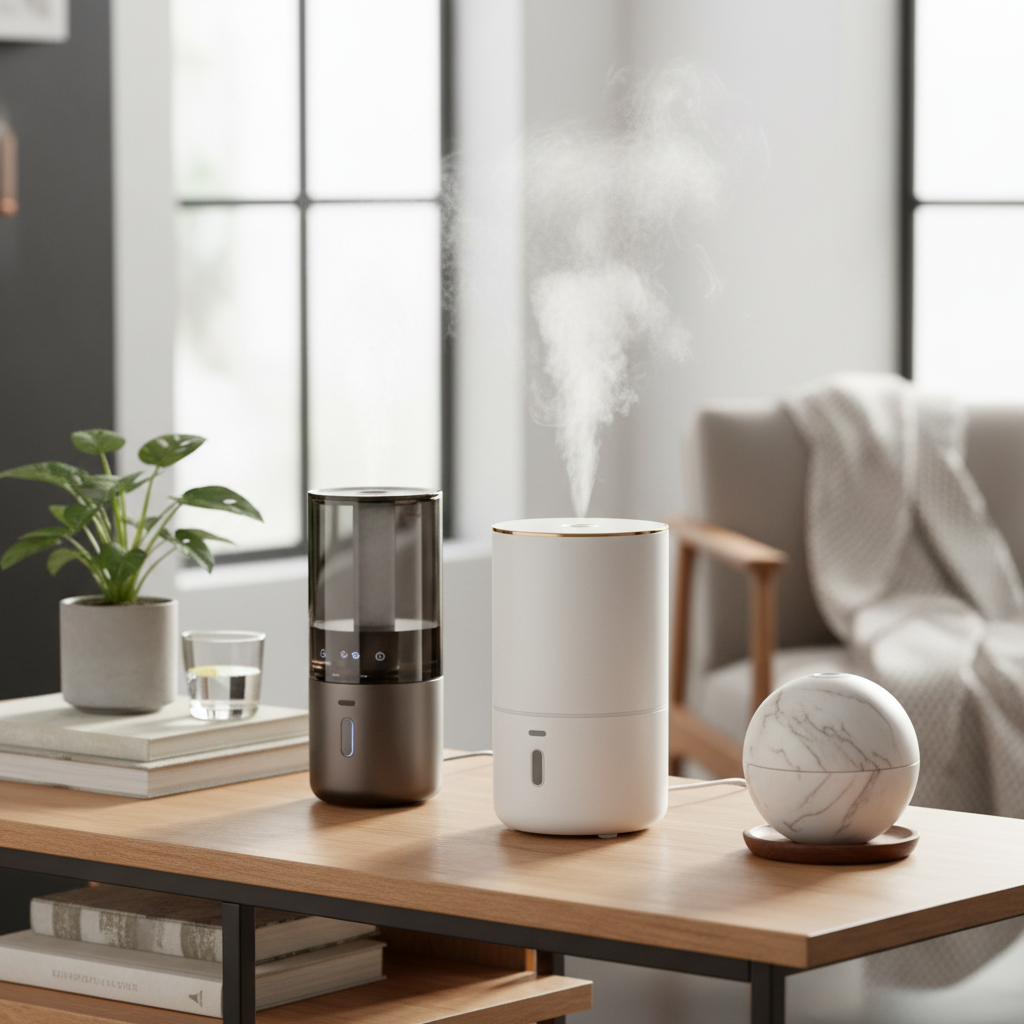
Do you often wake up with a dry throat, itchy skin, or experience static shocks in your home? These are common signs of dry indoor air, a widespread issue that can impact your health and comfort. A humidifier might be the simple yet powerful solution you’ve been searching for. By adding essential moisture back into your environment, humidifiers can transform your living space, making it more comfortable and healthier for everyone.
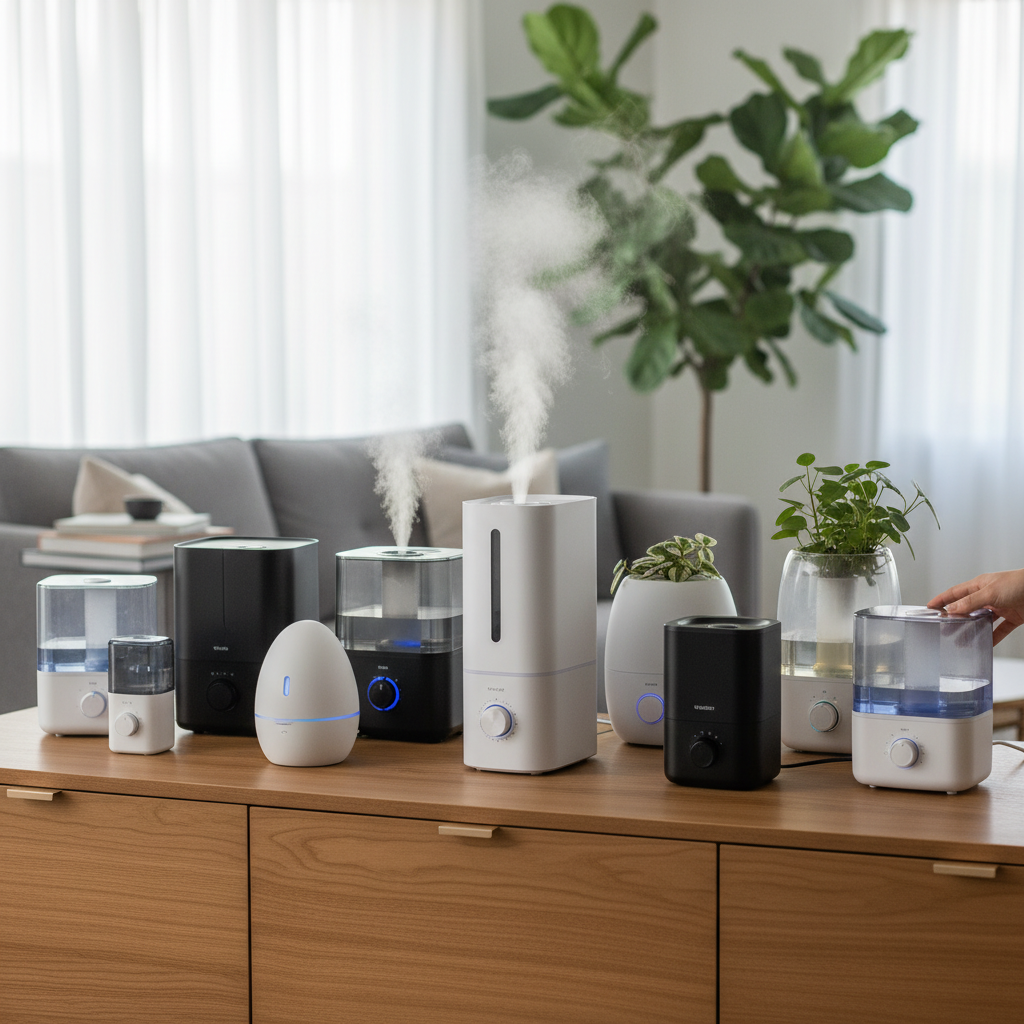
In this comprehensive guide, we’ll explore everything you need to know about humidifiers in 2026. We’ll delve into their benefits, break down the different types available, and offer a detailed buying guide to help you select the perfect model. Plus, we’ll unveil our top 10 picks for the best humidifiers this year, ensuring you find a reliable and effective solution to banish dry air for good.
What is a Humidifier? Why Do You Need One?
A humidifier is an appliance that increases moisture levels in the air by releasing water vapor. This seemingly simple function offers a wealth of benefits for your health and the well-being of your home, especially during drier seasons or in arid climates.
For your health, humidifiers are invaluable. They can alleviate dry skin, soothe irritated eyes, and combat dryness in your throat and nasal passages. Many find relief from allergy and asthma symptoms, frequent coughs, and sinus headaches with proper humidification. Moreover, maintaining adequate humidity can help thin mucus, making breathing easier and even reducing snoring for a more restful night’s sleep. Beyond personal comfort, some studies suggest that ideal humidity levels (between 40% and 60%) can help reduce the airborne transmission of certain viruses, contributing to a healthier household environment.
Beyond personal health, your home benefits too. Dry air can wreak havoc on wooden furniture, floors, and even musical instruments, causing them to crack and warp over time. Houseplants often thrive in more humid conditions, appearing healthier and more vibrant. You might also notice a significant reduction in annoying static electricity. Interestingly, humid air feels warmer than dry air, which could allow you to set your thermostat a little lower and potentially save on heating costs.
Popular Humidifier Types: Pros and Cons
Choosing a humidifier starts with understanding the different types, each with its own operational method, advantages, and disadvantages.
Evaporative Humidifiers
Evaporative humidifiers work by drawing dry air through a moistened wick or filter. A fan then disperses this invisible, naturally humidified air into the room.
- Pros: They are energy-efficient, offer a natural humidification process, and their filters trap minerals, reducing “white dust” and providing cleaner moisture. They also have a lower risk of over-humidification.
- Cons: These models typically produce some fan noise, especially on higher settings, and require regular replacement of wicks or filters, which is an ongoing maintenance cost.
|
Our Picks for the Best Humidifier in 2026
As an Amazon Associate I earn from qualifying purchases.
|
||
| Num | Product | Action |
|---|---|---|
| 1 | Humidifiers for Bedroom Large Room with 7L/1.85Gal Large Humidifier, Smart App & Remote Control, 4 Mist Levels Large Room Humidifiers for Home Midnight |

|
| 2 | LEVOIT Humidifiers for Bedroom Large Room Home, (6L) Cool Mist Top Fill Essential Oil Diffuser for Baby & Plants, Smart App & Voice Control, Rapid Humidification & Auto Mode - Quiet Sleep Mode, Gray |
|
| 3 | Dreo Smart Humidifiers for Bedroom, Top Fill 4L Supersized Humidifier Large Room with 28 dB, 36H Runtime, Touch/APP/Voice Control, Nightlight, Cool Mist Humidifiers for Baby, Plants, Indoor, Black |
|
| 4 | Dreo Humidifiers for Bedroom, 4L Top Fill for Large Room, 36H Runtime, 28 dB Quiet Supersized Cool Mist Air Humidifier for Baby Nursery, Plants, Indoor, Night Light, Easy to Clean & Fill, White |
|
| 5 | LEVOIT - Humidifiers for Bedroom - Quiet (3L Water Tank) - Cool Mist/Top Fill/Essential Oil Diffuser/25Watt - Home/Large Room - 360° Nozzle - Rapid Ultrasonic Humidification for Baby Nursery/Plant |
|
| 6 | LEVOIT Top Fill Humidifiers for Bedroom, 2.5L Tank for Large Room, Easy to Fill & Clean, 28dB Quiet Cool Mist Air Humidifier for Home Baby Nursery & Plants, Auto Shut-off for Safety, 25H |
|
| 7 | BOXING 3L Cool Mist Humidifiers, Ultra Quiet 20dB for Bedroom, Baby & Office, Top Fill Air Humidifier for Large Room Home & Indoor Plants, 30H Runtime, Essential Oil Tray, Night Light, BPA-Free, White |
|
| 8 | MegaWise Topfill 7-colour Night light humidifier for Kid bedroom with 3.5L Large Capacity, No leakage Design Fine Mist Output Auto Shutoff, Essential Oil Safe Tank |
|
| 9 | Homvana Humidifiers for Bedroom Home, 3.6 L Cool Mist Top-Fill 34H Super Long Time, Quiet 23dB, Baby Humidifier, Oil Diffuser for Large Room, House, Plant, Nursery, Office, BPA FREE, Ultrasonic (Grey) |
|
| 10 | BREEZOME 6L Humidifiers for Bedroom Large Room & Essential Oil Diffuser, Ultrasonic Top Fill Cool Mist Humidifiers for Baby, Plants, Nursery Last up to 60 Hours, Smart Humidistat Control, Quiet, Black |
|
Ultrasonic Humidifiers
Ultrasonic humidifiers use a metal diaphragm vibrating at high frequencies to create a fine, cool mist that is then released into the air.
- Pros: They are notably quieter than evaporative models, making them ideal for bedrooms and offices. They are also generally energy-efficient and can quickly add moisture to a room.
- Cons: If not using distilled or demineralized water, ultrasonic humidifiers can produce “white dust” (mineral deposits) that settles on surfaces and can be inhaled. They require frequent cleaning to prevent the buildup of mold and bacteria.
Steam Vaporizers
Steam vaporizers, also known as warm mist humidifiers, heat water to its boiling point, releasing a clean, warm steam into the room.
- Pros: The boiling process effectively kills bacteria and mold in the water, providing sterilized moisture. They can also be used with medicated inhalants for cold and flu relief.
- Cons: They consume more electricity due to the heating element and pose a potential burn risk from hot water or steam, making them less suitable for homes with small children or pets.
Impeller Humidifiers
Impeller humidifiers generate a cool mist by using a rapidly rotating disk that flings water at a diffuser, breaking it into tiny droplets.
- Pros: These humidifiers are generally safer than steam vaporizers as they produce a cool mist. They are also easy to use.
- Cons: They can be noisy due to the spinning disk and may be less efficient at humidifying larger spaces compared to other types.
Humidifier Type Comparison Table
| Feature | Evaporative | Ultrasonic | Steam Vaporizer | Impeller |
|---|---|---|---|---|
| Mist Type | Cool, Invisible | Cool or Warm Mist | Warm, Visible Steam | Cool Mist |
| Noise Level | Moderate (fan noise) | Very Low/Quiet | Quiet | Moderate/Noisy |
| Energy Use | Moderate | Low | High | Low |
| White Dust | Minimal (filter traps minerals) | High (if tap water used) | None | Minimal |
| Maintenance | Regular filter changes, tank cleaning | Frequent cleaning, distilled water for best results | Regular tank cleaning, decalcifying | Regular tank cleaning |
| Coverage Area | Good for medium to large rooms | Good for small to medium rooms (some larger models exist) | Good for small rooms | Small rooms |
| Health Benefits | General humidity, reduces airborne particles | General humidity | Sterilized mist, good for congestion | General humidity |
| Safety | Low risk | Low risk | Potential burn risk (hot water/steam) | Low risk |
Buying Guide: Key Factors to Consider
With so many options available, choosing the right humidifier can feel overwhelming. Here are the crucial factors to consider:
Room Size & Coverage
Humidifiers are rated for specific coverage areas, usually in square feet. A small personal unit for your desk won’t suffice for a large living room. Measure the room where you intend to use the humidifier and select a model with an appropriate capacity. For whole-house humidification, models integrate directly with your HVAC system.
Desired Humidity Level & Humidistats
The ideal indoor humidity level typically ranges between 30% and 50%. Many advanced humidifiers include a built-in humidistat, which automatically measures the room’s humidity and adjusts the output to maintain your desired level. This prevents over-humidification, which can lead to mold and mildew growth.
Budget
Humidifiers come in a wide price range. Basic models are very affordable, while smart, feature-rich, or whole-house systems can be a significant investment. Consider your needs and prioritize features that align with your budget. Remember to factor in ongoing costs like replacement filters if applicable.
Key Features
- Warm or Cool Mist: Ultrasonic humidifiers often offer both. Cool mist is generally safer, especially for children. Warm mist can feel soothing in colder months.
- Tank Capacity & Runtime: Larger tanks mean longer operation times between refills, which is convenient, especially overnight.
- Noise Level: Crucial for bedrooms and offices. Ultrasonic models are usually the quietest.
- Smart Features: App control, integration with voice assistants (Alexa, Google Home), and programmable schedules offer convenience.
- Auto Shut-off: A safety feature that turns the unit off when the water tank is empty.
- Essential Oil Tray: Allows you to diffuse aromatherapy oils without damaging the humidifier’s internal components.
- UV Sterilization: Some models include UV-C light to kill germs in the water before misting, enhancing air quality.
Brand Reputation
Opting for reputable brands often ensures better product quality, reliability, customer support, and warranty coverage. Look for brands known for their humidification technology.
Top 10 Most Popular Humidifiers in 2026
Based on performance, features, ease of use, and overall value, here are our top picks for humidifiers in 2026:
-
Levoit OasisMist 450S Smart Humidifier: This model consistently ranks high for its excellent humidification performance, competitive pricing, and intuitive app controls. It offers both warm and cool mist options and features dual 360-degree mist nozzles for efficient room coverage. Its compact design belies a generous 4.5-liter tank.
-
Dreo Smart Humidifier HM713S: An outstanding smart humidifier known for its sleek design, powerful performance, and extensive smart features. With a 6-liter tank, it offers long runtimes and both warm and cool mist, making it versatile for year-round use. It includes a built-in humidistat and auto mode for easy humidity management.
-
Crane 1 Gal. Drop Cool-Mist Humidifier: A popular choice for bedrooms, this filter-free cool-mist humidifier is praised for its user-friendliness and simple interface. It features a one-gallon tank and a directional mist outlet, providing effective moisture with minimal fuss. It’s a great entry-level option for those new to humidifiers.
-
Virtuvi Cloud Humidifier: A premium humidifier that stands out for its impressive capacity, expansive coverage (up to 600 sq ft), and luxurious aesthetic. Its dishwasher-friendly water reservoir makes cleaning a breeze, and it operates quietly, earning high marks for design and functionality.
-
Vornado Lucerna 3 Alchemy Ultrasonic Humidifier / Vornado UH100: Ideal for large rooms up to 600 square feet, this filterless ultrasonic humidifier offers strong performance without the need for filter replacements. It’s easy to use and maintains a relatively quiet operation, making it suitable for spacious sleeping environments.
-
Dreo Smart Humidifier HM311S: An excellent budget-friendly smart humidifier that offers remarkable performance for its price point. It’s best suited for rooms up to 300 square feet, featuring effective humidification and smart app controls typically found in more expensive models.
-
Honeywell HUL520B Mistamate Cool Mist Humidifier: A top pick for bedrooms, this cool mist humidifier is celebrated for its whisper-quiet operation, straightforward controls, and low-maintenance, filterless design. It’s very intuitive and easy to use, perfect for a peaceful night’s sleep.
-
Levoit LV600HH Humidifier: This powerful humidifier is well-suited for medium to large bedrooms, offering both warm and cool mist settings and a large 1.5-gallon water tank for extended use. It operates quietly and includes a remote control for convenience, though its auto settings may require fine-tuning.
-
Levoit Classic 300S Humidifier: Known for its easy-to-clean design and smart features, this sleek humidifier is a favorite. It connects via Wi-Fi, allowing control through a smartphone app, and offers a substantial 1.5-gallon capacity for up to 60 hours of continuous operation.
-
AprilAire 600 Whole-House Humidifier: For those seeking consistent humidity throughout their entire home, the AprilAire 600 is a leading choice. This bypass humidifier integrates with your HVAC system, effectively humidifying up to 5,000 square feet. It’s highly effective, requires minimal annual maintenance, and works to improve overall indoor air quality.
Humidifier Usage and Maintenance Guide
To maximize the effectiveness and longevity of your humidifier, proper usage and diligent maintenance are key.
First, always place your humidifier on a flat, water-resistant surface away from electronics, fabrics, and direct sunlight. Avoid placing it in confined spaces, as excessive localized humidity can encourage mold growth. The Environmental Protection Agency (EPA) recommends maintaining indoor humidity levels between 30% and 50%. Using a hygrometer (some humidifiers have them built-in) can help you monitor this.
Regular cleaning is paramount to prevent the growth of mold, bacteria, and other microorganisms. You should clean your humidifier every two to three days. This typically involves disassembling the unit, emptying any remaining water, scrubbing the tank and base with a mild detergent or a vinegar-water solution, and rinsing thoroughly. For ultrasonic models, using distilled or demineralized water is highly recommended to prevent the dreaded “white dust” from mineral deposits. Always change the water in the reservoir daily, even if it hasn’t completely emptied. If your model uses filters, replace them according to the manufacturer’s recommendations, as old filters can harbor contaminants.
“Maintaining optimal indoor humidity between 40% and 60% is crucial for both your health and your home’s longevity, but remember that consistent cleaning and using the right water type are equally important.”
Conclusion
Choosing the right humidifier for your home in 2026 can profoundly impact your comfort and health. From soothing dry skin and alleviating respiratory discomfort to protecting your home’s furnishings and even boosting sleep quality, the benefits are undeniable. By understanding the different types, considering essential buying factors, and committing to regular maintenance, you can find a top-rated model that perfectly suits your needs.
Don’t let dry air compromise your well-being. Explore our top picks, find the humidifier that aligns with your lifestyle, and start enjoying the fresh, balanced air you deserve. What difference will optimal humidity make in your daily life?
Frequently Asked Questions
Is it good to sleep with a humidifier?
Yes, sleeping with a humidifier can significantly improve air quality and ease breathing, especially if you suffer from dry sinuses, congestion, or snoring. It also helps keep your skin and nasal passages hydrated overnight.
What are the negatives of a humidifier?
If not cleaned regularly, humidifiers can become breeding grounds for mold and bacteria, potentially releasing these contaminants into the air. Overuse can also lead to excessive humidity (above 50%), which may encourage mold growth and trigger allergies or asthma.
How do you know if you need a humidifier?
You might need a humidifier if indoor humidity levels consistently drop below 30%. Common signs include dry skin, chapped lips, nosebleeds, frequent coughs, static electricity, or damage to wooden furniture.
Can you put essential oils in any humidifier?
No, you should only put essential oils into humidifiers that are specifically designed with an aromatherapy tray or diffuser function. Adding oils directly to the water tank of a standard humidifier can damage the unit and may release harmful particles into the air.
What is the ideal humidity level?
The ideal indoor humidity level, as recommended by the Environmental Protection Agency (EPA), is between 30% and 50%. This range is optimal for human comfort and health, while also inhibiting the growth of mold, dust mites, and other allergens.