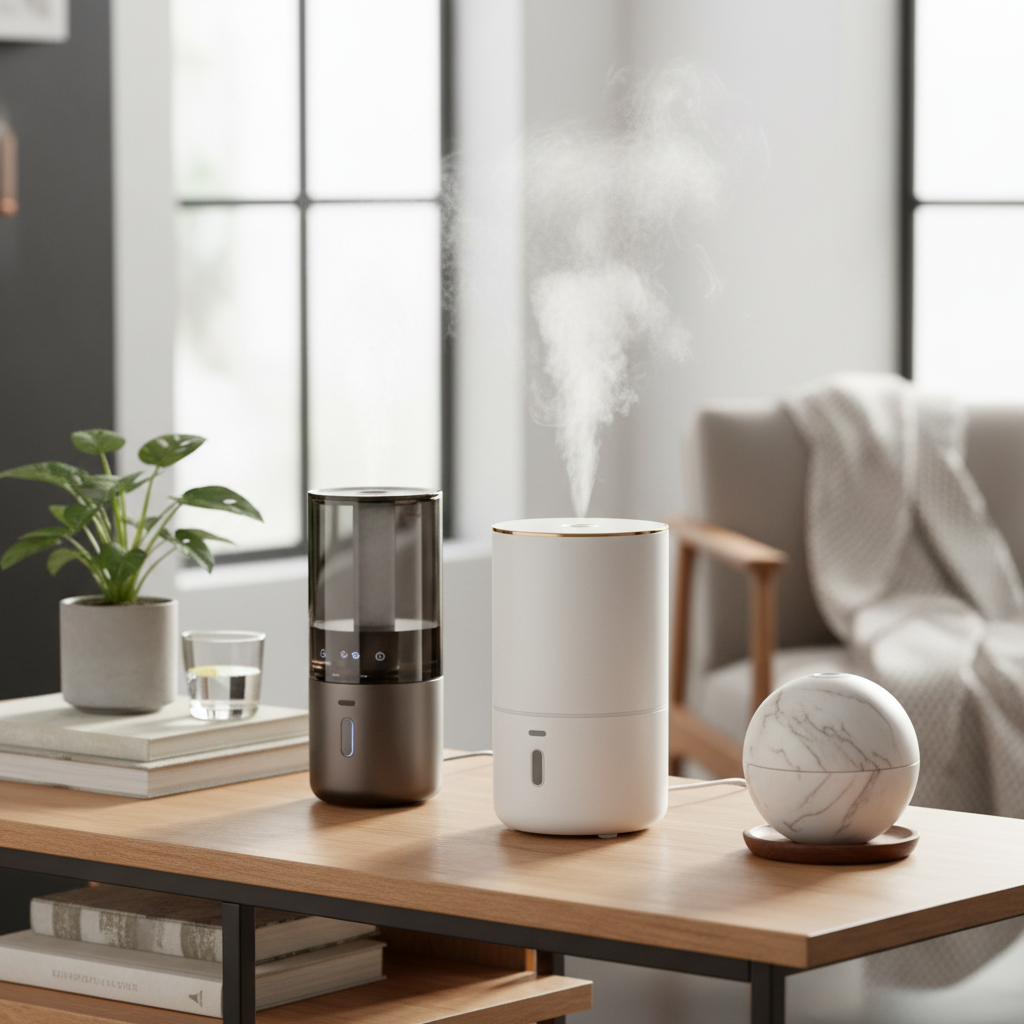
As an experienced technician who has spent over a decade deeply immersed in the world of humidifiers, I understand the critical role these devices play in preserving our most cherished possessions—especially musical instruments. For any musician, the sound and longevity of their guitar, violin, piano, or other wooden instrument are paramount. But what many don’t realize is that maintaining an optimal humidity level is as crucial as regular tuning or careful storage. Ignoring humidity can lead to irreversible damage, affecting both playability and tonal quality. This comprehensive guide will arm you with the knowledge to choose the perfect humidifier, ensuring your instruments remain in pristine condition for generations to come.
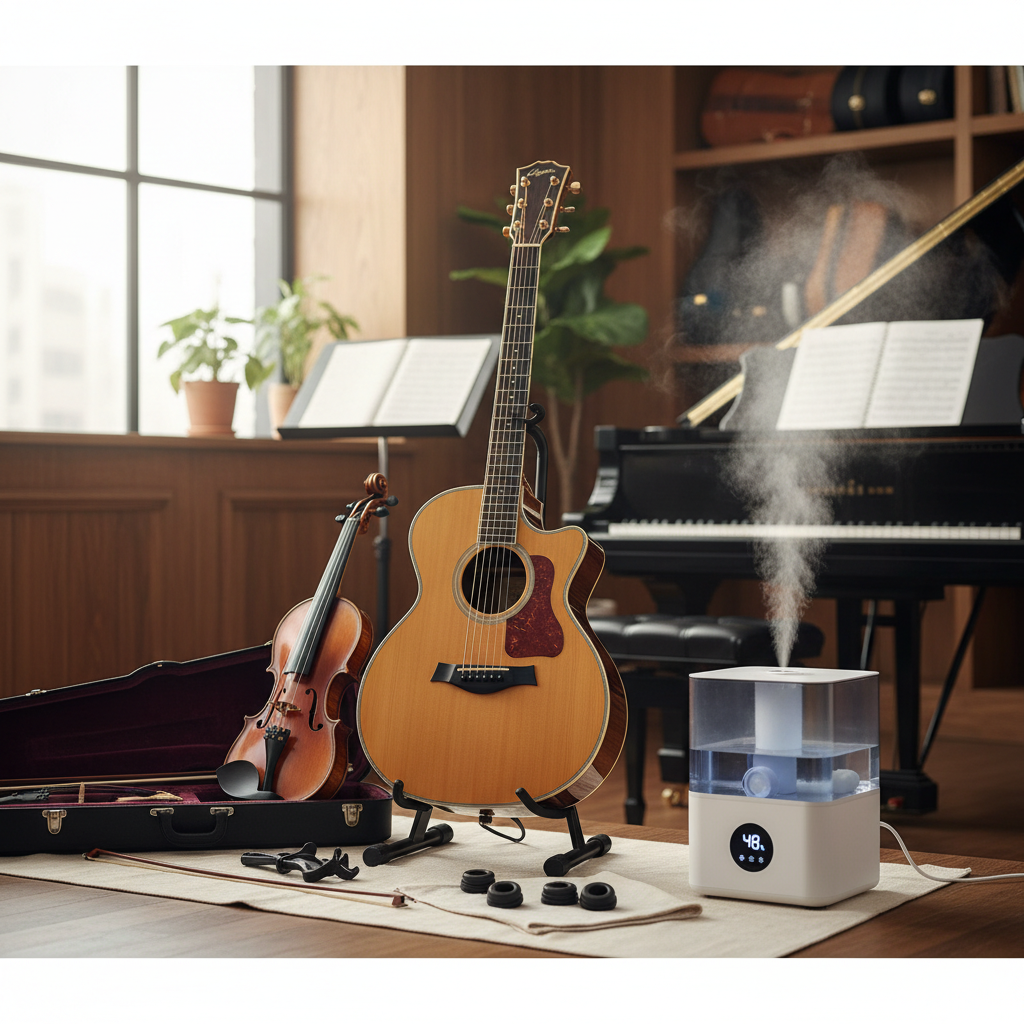
What is a Humidifier? Why Your Instruments Need One
|
Our Picks for the Best Humidifier in 2026
As an Amazon Associate I earn from qualifying purchases.
|
||
| Num | Product | Action |
|---|---|---|
| 1 | Dreo Smart Humidifiers for Bedroom, Top Fill 4L Supersized Humidifier Large Room with 28 dB, 36H Runtime, Touch/APP/Voice Control, Nightlight, Cool Mist Humidifiers for Baby, Plants, Indoor, Black |

|
| 2 | BREEZOME 6L Humidifiers for Bedroom Large Room & Essential Oil Diffuser, Ultrasonic Top Fill Cool Mist Humidifiers for Baby, Plants, Nursery Last up to 60 Hours, Smart Humidistat Control, Quiet, Black |
|
| 3 | LEVOIT - Humidifiers for Bedroom - Quiet (3L Water Tank) - Cool Mist/Top Fill/Essential Oil Diffuser/25Watt - Home/Large Room - 360° Nozzle - Rapid Ultrasonic Humidification for Baby Nursery/Plant |
|
| 4 | LEVOIT Humidifiers for Bedroom Large Room Home, (6L) Cool Mist Top Fill Essential Oil Diffuser for Baby & Plants, Smart App & Voice Control, Rapid Humidification & Auto Mode - Quiet Sleep Mode, Gray |
|
| 5 | LEVOIT Top Fill Humidifiers for Bedroom, 2.5L Tank for Large Room, Easy to Fill & Clean, 28dB Quiet Cool Mist Air Humidifier for Home Baby Nursery & Plants, Auto Shut-off for Safety, 25H |
|
| 6 | Humidifiers for Bedroom Large Room with 7L/1.85Gal Large Humidifier, Smart App & Remote Control, 4 Mist Levels Large Room Humidifiers for Home Midnight |
|
| 7 | BOXING 3L Cool Mist Humidifiers, Ultra Quiet 20dB for Bedroom, Baby & Office, Top Fill Air Humidifier for Large Room Home & Indoor Plants, 30H Runtime, Essential Oil Tray, Night Light, BPA-Free, White |
|
| 8 | MegaWise Topfill 7-colour Night light humidifier for Kid bedroom with 3.5L Large Capacity, No leakage Design Fine Mist Output Auto Shutoff, Essential Oil Safe Tank |
|
| 9 | Homvana Humidifiers for Bedroom Home, 3.6 L Cool Mist Top-Fill 34H Super Long Time, Quiet 23dB, Baby Humidifier, Oil Diffuser for Large Room, House, Plant, Nursery, Office, BPA FREE, Ultrasonic (Grey) |
|
| 10 | Dreo Humidifiers for Bedroom, 4L Top Fill for Large Room, 36H Runtime, 28 dB Quiet Supersized Cool Mist Air Humidifier for Baby Nursery, Plants, Indoor, Night Light, Easy to Clean & Fill, White |
|
A humidifier is a device that adds moisture to the air, increasing relative humidity. For wooden musical instruments, this isn’t just a minor detail; it’s a necessity. Instruments crafted from wood, particularly acoustic guitars, violins, cellos, and woodwind instruments, are incredibly sensitive to their environment. Wood is a hygroscopic material, meaning it naturally absorbs and releases moisture from the surrounding air. This constant exchange directly impacts its physical properties.
When the air is too dry, typically below 40-45% Relative Humidity (RH), wood begins to shrink. This shrinkage can manifest in alarming ways: sharp fret ends protruding from the fretboard, cracks forming on the guitar top, sides, or binding, buzzing strings due to changes in neck relief, and even glue joints failing. Conversely, excessive humidity, above 55-60% RH, causes wood to swell. While less prone to cracking, over-humidification can lead to warped tops, lifting finishes, duller tone, and even mold growth in extreme conditions. Maintaining a consistent humidity level, ideally between 45% and 55% RH at approximately 70°F (21°C), is vital to prevent these issues and ensure your instrument performs and sounds its best. It’s also worth noting that most instrument manufacturers explicitly state that warranties do not cover damage caused by improper humidification, placing the responsibility squarely on the owner.
Understanding Humidifier Types for Instrument Care
When it comes to humidifying your instruments, you generally have two main approaches: in-case humidifiers for targeted protection or room humidifiers for a broader environmental control. Each type has distinct advantages and considerations.
In-Case Humidifiers: Targeted Protection
In-case humidifiers are designed to create a microclimate within your instrument’s case. They are an excellent solution for single instruments or for musicians who frequently travel.
- How They Work: These typically involve a sponge, gel packs, or two-way humidity control packets that gradually release or absorb moisture to maintain a specific RH level within the sealed environment of the case. They are often placed in the soundhole (for guitars), near the headstock, or in a dedicated compartment.
- Pros: Highly portable, cost-effective for single instruments, provide precise control within a confined space, and prevent rapid humidity fluctuations. Two-way systems, like those using salt-based solutions, can both add and remove moisture, offering excellent stability.
- Cons: Limited capacity means sponges need frequent refilling (sometimes daily in very dry conditions), primarily suitable for cased instruments (not for instruments left on stands), and single-direction humidifiers can only add moisture, not remove it.
- Examples: Popular options include the D’Addario Humidipak system, Boveda 2-way humidity control packs, and the Music Nomad Humitar.
Room Humidifiers: Broad Environmental Control
For musicians with multiple instruments, a collection displayed on stands, or those living in extremely dry climates, a room humidifier offers a more comprehensive solution by controlling the humidity of an entire space.
- Evaporative Humidifiers:
- How They Work: These use a fan to draw air through a saturated wick filter. Water evaporates from the wick, adding moisture to the air. The evaporation process is self-regulating; as the air becomes more humid, less water evaporates.
- Pros: Naturally self-regulating (less chance of over-humidification), do not produce “white dust” (minerals are left behind in the filter), generally good for larger areas, and energy-efficient.
- Cons: Can be noisy due to the fan, require regular filter replacement, and are often larger in size.
- Ultrasonic Humidifiers:
- How They Work: A metal diaphragm vibrates at an ultrasonic frequency, breaking water into a fine, cool mist that is then dispersed into the air.
- Pros: Extremely quiet operation, produce a visible, fine mist, and often have sleek designs.
- Cons: Can produce “white dust” (a fine, powdery residue of minerals from tap water) that settles on furniture and instruments, requiring the use of distilled or demineralized water to prevent this. If not cleaned regularly, they can also disperse bacteria or mold spores present in the water reservoir. They can also over-humidify smaller spaces if not monitored carefully.
- Warm Mist (Steam Vaporizers):
- How They Work: These humidifiers boil water to create a sterile steam, which is then released into the air.
- Pros: Produces clean, germ-free mist (boiling kills bacteria and mold), can add a slight warmth to the room, and filterless design means no recurring filter costs.
- Cons: Consumes more energy than cool mist types, the hot steam can pose a burn risk, and they may be less effective at quickly humidifying large spaces. The boiling element requires descaling maintenance to prevent mineral buildup.
Comparison Table: In-Case vs. Room Humidifiers
| Feature | In-Case Humidifiers | Evaporative Room Humidifiers | Ultrasonic Room Humidifiers | Warm Mist Room Humidifiers |
|---|---|---|---|---|
| Coverage | Single instrument (in case) | Large rooms, open spaces | Small to medium rooms | Small to medium rooms |
| Cost (Initial) | Low ($10-$50) | Moderate ($50-$200) | Moderate ($40-$150) | Low to Moderate ($30-$100) |
| Maintenance | Refill/replace packs frequently (days/weeks) | Filter replacement, regular cleaning | Regular cleaning, distilled water for no white dust | Descaling heating element, regular cleaning |
| Safety Risks | Minimal (leakage if over-saturated) | Minimal (fan blades usually enclosed) | Potential white dust on surfaces/instruments | Burn risk from hot steam/water |
| Portability | High (fits in case) | Low (stationary unit) | Moderate (can move between rooms) | Low (stationary unit) |
| Humidity Control | Targeted, 2-way options available | Self-regulating, even distribution | Can over-humidify small spaces, often lacks precise control | Less precise control, can raise room temperature slightly |
| White Dust Risk | None | None (minerals trapped in filter) | High (with tap water), none (with distilled water) | None (minerals left in boiling pot) |
| Noise Level | Silent | Moderate (fan noise) | Very quiet | Very quiet (occasional gurgling) |
Choosing the Right Humidifier for Your Instruments: Factors to Consider
Selecting the ideal humidifier depends on several factors specific to your situation.
- Storage Method: If your instrument spends most of its time in a hard case, an in-case humidifier is often the most efficient and practical choice. For instruments kept on stands or wall hangers, a room humidifier is essential.
- Number of Instruments: A single instrument in a case can be well-maintained with an in-case system. A collection of instruments, especially in an open room, necessitates a room humidifier to ensure consistent environmental conditions for all.
- Room Size: Room humidifiers are rated for specific square footage. Ensure the model you choose is appropriate for the size of your music space to avoid under- or over-humidification.
- Budget: Consider not just the initial purchase price but also ongoing costs like replacement filters, distilled water, and energy consumption. Two-way humidity control packs for cases can be more expensive upfront but offer less frequent maintenance.
- Desired Features: Look for features like built-in hygrometers, automatic shut-off when desired humidity is reached or water tank is empty, and smart controls for app integration and scheduling. These can greatly simplify maintenance.
- Water Quality: If you opt for an ultrasonic room humidifier, using distilled or demineralized water is highly recommended to prevent unsightly “white dust” from coating your instruments and furniture.
- Monitoring: Regardless of the humidifier type, investing in a separate, accurate digital hygrometer is crucial. Place it near your instrument, not just relying on a humidifier’s built-in gauge, to independently verify humidity levels.
Top Humidifier Recommendations for Guitars & Instruments
Based on extensive experience and industry insights, here are some top recommendations for safeguarding your prized musical investments:
- D’Addario Humidipak System (For Cases): This two-way system uses salt-based packets to actively maintain a precise 45-50% RH inside your instrument case. It adds or removes moisture as needed, eliminating guesswork and significantly reducing maintenance frequency. Ideal for high-value instruments or frequent travelers.
- Boveda 2-Way Humidity Control Packs (For Cases): Similar to D’Addario, Boveda packs offer precise two-way humidity control for cases. They come in various RH levels (49% is common for instruments) and are a simple, effective, and mess-free solution for consistent in-case humidification.
- Music Nomad MN-300 Humitar (For Cases/Soundholes): This compact, soundhole-mounted humidifier uses a specialized Humidi-Bar sponge that holds a significant amount of water and releases it slowly. It’s straightforward to use, durable, and provides reliable single-direction humidification within an instrument case.
- LEVOIT LV600S Smart Warm and Cool Mist Humidifier (For Rooms): For larger rooms where instruments are stored openly, the LEVOIT LV600S offers versatile warm and cool mist options. Its large capacity and smart controls via an app or voice make it convenient to manage. It’s an ultrasonic unit, so using distilled water is key to avoid white dust on your instruments.
- Vornado Evap40 Evaporative Humidifier (For Rooms): A popular choice for larger spaces, the Vornado Evap40 is an evaporative humidifier known for its robust performance and ability to humidify sizable rooms effectively without producing white dust. While it has a fan, many find its consistent output and natural humidification method worth the slight noise.
Essential Usage and Maintenance Tips
Proper usage and consistent maintenance are just as important as choosing the right humidifier.
- Regular Cleaning: Humidifiers, especially those that hold standing water, can become breeding grounds for bacteria and mold if not cleaned regularly. Follow manufacturer guidelines, typically involving weekly cleaning with vinegar or a mild disinfectant. This is particularly crucial for ultrasonic and warm mist units.
- Use Distilled Water (for Ultrasonic): To prevent “white dust” from mineral deposits, always use distilled or demineralized water in ultrasonic humidifiers. This protects your instruments from a fine layer of white residue.
- Strategic Placement: Place room humidifiers on a flat, stable surface away from direct sunlight, heating/cooling vents, and at least a few feet away from your instruments. Avoid placing them directly on wooden furniture without a protective mat underneath.
- Monitor Constantly: A standalone digital hygrometer is your best friend. Place it near your instruments to get an accurate reading of the ambient humidity. This allows you to fine-tune your humidifier settings and react quickly to environmental changes.
- Seasonal Adjustments: Humidity levels fluctuate significantly with seasons. You’ll likely need to adjust humidifier output more frequently in dry winter months (especially with forced-air heating) and potentially less in humid summers.
- Recognize the Signs: Be vigilant for signs of both under- and over-humidification in your instruments. Early detection can prevent costly repairs. Look for sharp fret ends, sinking or bulging tops, buzzing, or changes in action.
Common Questions About Instrument Humidification
Maintaining the perfect environment for your musical instruments often leads to common questions. Let’s address some of them directly.
- What are the signs of a dry guitar?
A dry guitar typically shows symptoms like sharp fret ends (where the fretboard wood has shrunk, leaving the metal frets protruding), a flattened or sunken top, increased string action, fret buzz, and potentially finish cracks or open glue seams. - Can a humidifier damage my guitar?
Yes, improper use can. Over-humidification (too much moisture) can cause wood swelling, warping, structural distortion, and a duller tone. Incorrect placement, especially of ultrasonic humidifiers without distilled water, can also leave mineral deposits or expose the instrument to concentrated moisture. - How often should I refill my humidifier?
The refill frequency depends on the humidifier type, its capacity, and the dryness of your environment. In-case humidifiers might need daily or weekly refills, while room humidifiers could last several days. Always check your hygrometer and the humidifier’s water level regularly. - Is 40% humidity too low for a guitar?
While some sources cite 40-60% as acceptable, 40% RH is generally at the lower end of the ideal range. Prolonged exposure below 45% can slowly lead to dehydration symptoms. Aiming for 45-55% is safer to prevent long-term stress on the wood.
Conclusion
Protecting your guitars and wooden instruments from the damaging effects of fluctuating humidity is an investment in their longevity, playability, and beautiful sound. By understanding the optimal humidity levels, knowing the different types of humidifiers available, and committing to regular monitoring and maintenance, you can shield your cherished instruments from harm. Whether you choose a compact in-case solution or a powerful room humidifier, the key is consistency and attentiveness. Don’t let environmental neglect silence your music; take proactive steps today to ensure your instruments continue to sing for years to come.
What steps will you take to protect your instrument’s precious wood this season?
Frequently Asked Questions
What is the ideal humidity for storing an acoustic guitar?
The ideal relative humidity for storing an acoustic guitar is generally between 45% and 55% at around 70°F (21°C). Maintaining this range helps prevent the wood from shrinking or swelling, which can cause cracks, warping, and affect the instrument’s tone and playability.
How can I tell if my guitar is too dry or too wet?
Signs of a dry guitar include sharp fret ends, a sunken or flattened top, and fret buzz. An overly wet guitar might exhibit a bulging top, a duller sound, higher action, or even mold growth, though extreme wetness is less common.
Are cool mist humidifiers safe for wooden instruments?
Cool mist ultrasonic humidifiers are safe if used correctly. It’s crucial to use distilled or demineralized water to prevent “white dust” from settling on your instruments and to clean the unit regularly to avoid dispersing airborne pathogens.
Should I humidify my electric guitar as well?
While solid-body electric guitars are less susceptible to humidity changes than acoustic instruments, those with wooden necks (especially with exposed fretboards) and hollow-body electrics can still benefit from humidity control, ideally within the 40-60% RH range to prevent neck warping or fret issues.
How do 2-way humidity control packs work for instrument cases?
Two-way humidity control packs contain a salt-based solution that can either release or absorb moisture from the air within a sealed instrument case. This allows them to actively maintain a precise, pre-set relative humidity level, adapting to both overly dry and overly humid conditions.