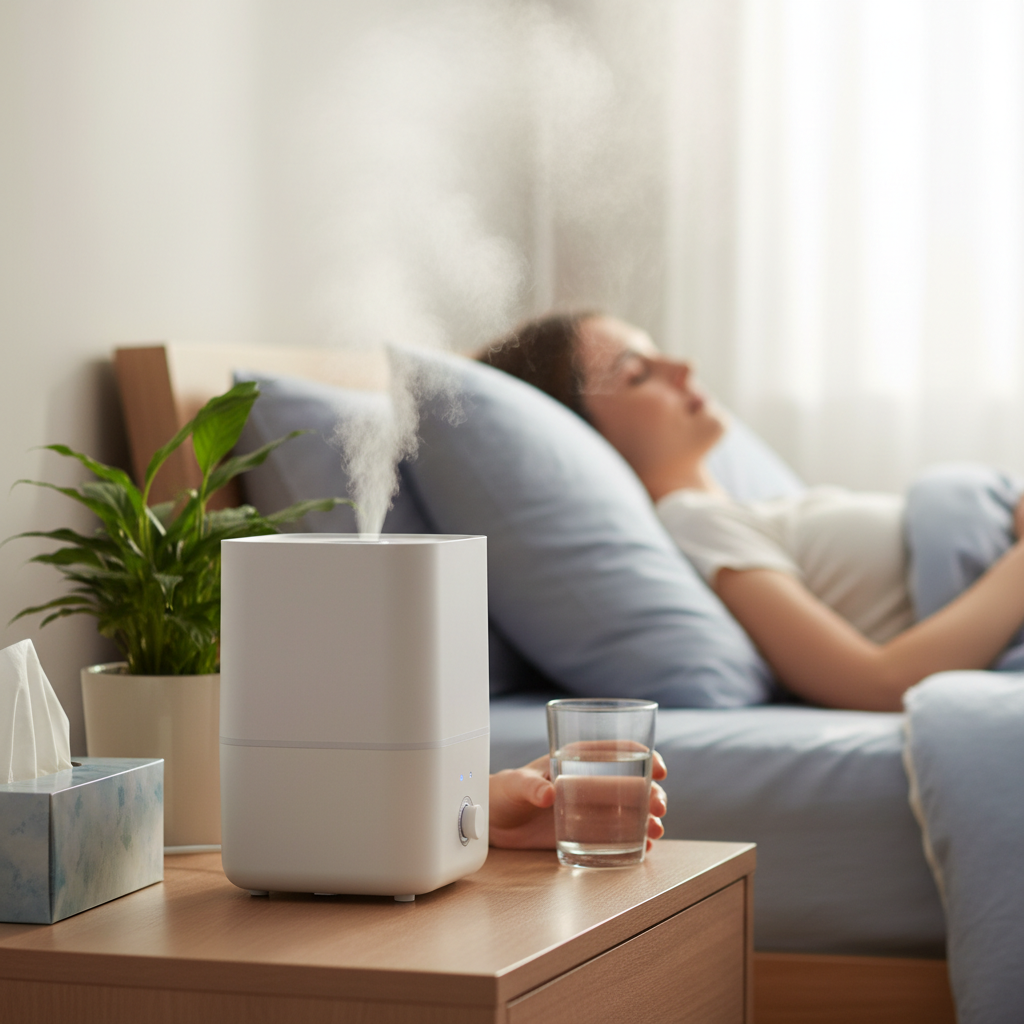
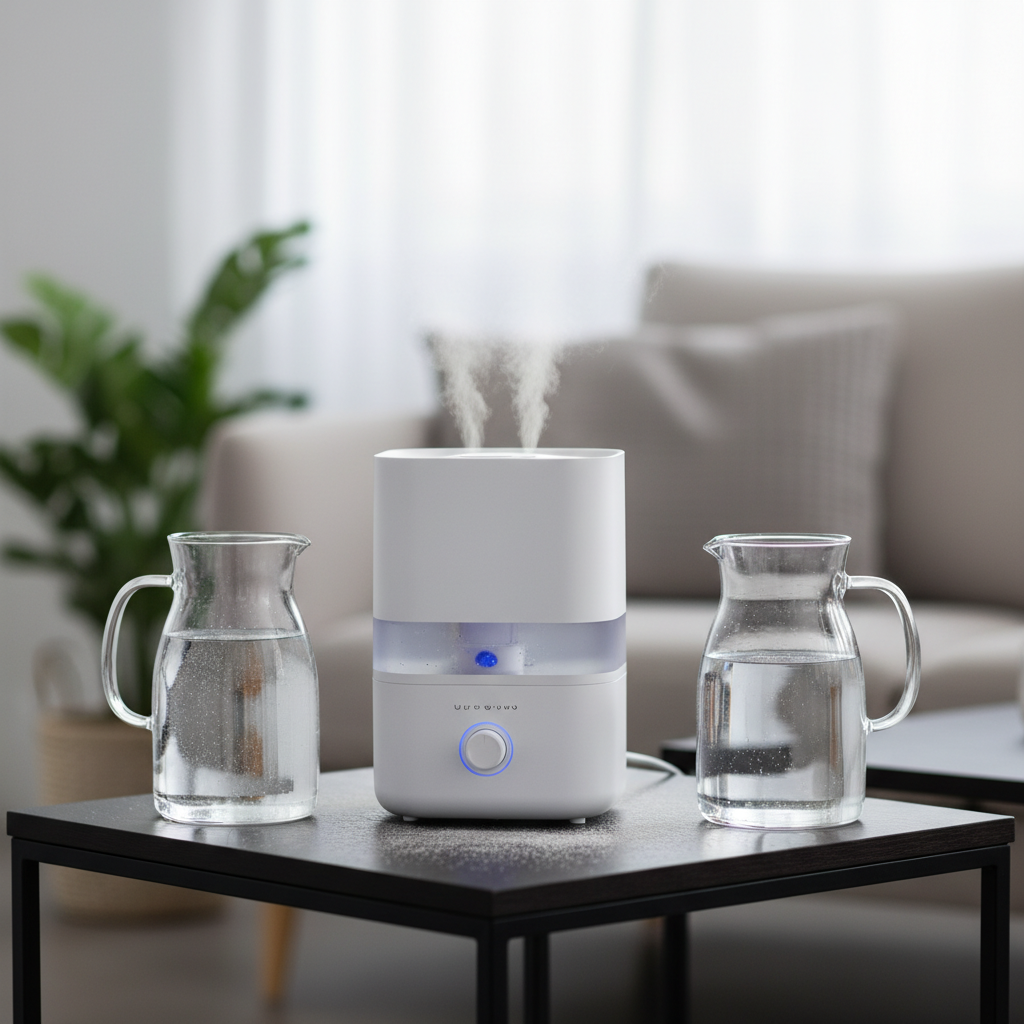
As a seasoned technician with over a decade immersed in the world of humidifiers, I’ve seen firsthand the common challenges homeowners face in maintaining optimal indoor air quality. One of the most frequent and perplexing issues is the appearance of a fine white dust that mysteriously settles on furniture and surfaces, especially around ultrasonic and impeller humidifiers. This phenomenon, often dismissed as mere household dust, is actually a clear indicator of the water you’re using. Understanding the crucial difference between tap water and distilled water is key to eliminating this nuisance and ensuring your humidifier works efficiently and safely.
What is a Humidifier? Why Do You Need One?
A humidifier is an appliance designed to add moisture, or humidity, to the air in your home. This seemingly simple function offers a wealth of benefits, particularly in dry climates or during colder months when heating systems strip moisture from the air. Proper humidity levels, typically between 40-60%, can alleviate dry skin, chapped lips, and irritated nasal passages, making breathing more comfortable. They can also soothe sore throats, reduce static electricity, and even protect wooden furniture and musical instruments from drying out and cracking.
There are several types of humidifiers, each operating with a distinct mechanism. Evaporative humidifiers use a fan to blow air across a moist wick filter, allowing water to naturally evaporate into the air. Warm mist or steam vaporizers boil water, releasing sterile steam. Ultrasonic and impeller humidifiers, however, create a fine mist through high-frequency vibrations or a rapidly rotating disk, respectively. While all aim to improve your living environment, the latter two are often the culprits behind that powdery white residue.
Understanding White Dust: The Science Behind It
The enigmatic white dust coating your surfaces isn’t some strange byproduct of your humidifier’s misting process itself, but rather a residue of the water you put into it. Specifically, it stems from the dissolved minerals naturally present in tap water. These minerals, primarily calcium and magnesium, are harmless in drinking water. However, when certain types of humidifiers aerosolize water, they disperse these microscopic mineral particles into the air along with the water vapor.
Ultrasonic and impeller humidifiers work by breaking water into extremely tiny droplets that are then released as a fine mist. When these water droplets evaporate into the air, the pure water molecules become airborne, but the dissolved mineral particles are left behind. These microscopic mineral solids then settle on nearby surfaces, forming the tell-tale white powder. The harder your tap water (meaning, the higher its mineral content), the more noticeable and persistent this white dust will be.
Beyond aesthetics, this mineral dust can have practical implications. It can infiltrate and prematurely clog your home’s air filters, including those in HVAC systems, leading to reduced efficiency and more frequent replacements. More significantly, while generally considered safe for most healthy individuals, these fine particulate matters can be inhaled deep into the lungs. For sensitive individuals, such as infants, young children, and those with allergies, asthma, or other pre-existing respiratory conditions, inhaling these mineral particles can potentially lead to respiratory irritation, coughing, or exacerbate their conditions. As one expert noted, “The mineral dust consists of very fine particles that can penetrate deep into the lungs when inhaled, potentially causing respiratory irritation or problems over time.”
Tap Water vs. Distilled Water: The Core Difference
The choice of water for your humidifier is the single most critical factor in preventing white dust and maintaining both your appliance and indoor air quality.
Tap Water: Convenience with Consequences
Tap water is undeniably convenient and cost-effective. It’s readily available from your faucet, making humidifier refills quick and simple. However, its convenience comes with a trade-off. As discussed, tap water contains varying levels of dissolved minerals like calcium, magnesium, and other impurities.
Pros of Using Tap Water:
- Convenience: Easily accessible from any tap.
- Cost-Effective: Free or very low cost compared to bottled water.
Cons of Using Tap Water:
- White Dust: The primary cause of mineral dust settling on surfaces.
- Mineral Buildup (Scale): Minerals accumulate inside the humidifier, forming hard, crusty deposits. This scale can clog components, reduce efficiency, and shorten the lifespan of your unit.
- Potential for Microorganisms: While tap water is treated for drinking, it can still contain trace impurities that, in the warm, stagnant environment of a humidifier tank, can become a breeding ground for bacteria, mold, and fungi if not cleaned rigorously. These microorganisms can then be dispersed into the air.
- Health Concerns for Sensitive Individuals: Inhaled mineral particles can irritate respiratory systems.
|
Our Picks for the Best Humidifier in 2026
As an Amazon Associate I earn from qualifying purchases.
|
||
| Num | Product | Action |
|---|---|---|
| 1 | LEVOIT - Humidifiers for Bedroom - Quiet (3L Water Tank) - Cool Mist/Top Fill/Essential Oil Diffuser/25Watt - Home/Large Room - 360° Nozzle - Rapid Ultrasonic Humidification for Baby Nursery/Plant |

|
| 2 | Dreo Humidifiers for Bedroom, 4L Top Fill for Large Room, 36H Runtime, 28 dB Quiet Supersized Cool Mist Air Humidifier for Baby Nursery, Plants, Indoor, Night Light, Easy to Clean & Fill, White |
|
| 3 | BREEZOME 6L Humidifiers for Bedroom Large Room & Essential Oil Diffuser, Ultrasonic Top Fill Cool Mist Humidifiers for Baby, Plants, Nursery Last up to 60 Hours, Smart Humidistat Control, Quiet, Black |
|
| 4 | LEVOIT Humidifiers for Bedroom Large Room Home, (6L) Cool Mist Top Fill Essential Oil Diffuser for Baby & Plants, Smart App & Voice Control, Rapid Humidification & Auto Mode - Quiet Sleep Mode, Gray |
|
| 5 | MegaWise Topfill 7-colour Night light humidifier for Kid bedroom with 3.5L Large Capacity, No leakage Design Fine Mist Output Auto Shutoff, Essential Oil Safe Tank |
|
| 6 | Homvana Humidifiers for Bedroom Home, 3.6 L Cool Mist Top-Fill 34H Super Long Time, Quiet 23dB, Baby Humidifier, Oil Diffuser for Large Room, House, Plant, Nursery, Office, BPA FREE, Ultrasonic (Grey) |
|
| 7 | Humidifiers for Bedroom Large Room with 7L/1.85Gal Large Humidifier, Smart App & Remote Control, 4 Mist Levels Large Room Humidifiers for Home Midnight |
|
| 8 | BOXING 3L Cool Mist Humidifiers, Ultra Quiet 20dB for Bedroom, Baby & Office, Top Fill Air Humidifier for Large Room Home & Indoor Plants, 30H Runtime, Essential Oil Tray, Night Light, BPA-Free, White |
|
| 9 | Dreo Smart Humidifiers for Bedroom, Top Fill 4L Supersized Humidifier Large Room with 28 dB, 36H Runtime, Touch/APP/Voice Control, Nightlight, Cool Mist Humidifiers for Baby, Plants, Indoor, Black |
|
| 10 | LEVOIT Top Fill Humidifiers for Bedroom, 2.5L Tank for Large Room, Easy to Fill & Clean, 28dB Quiet Cool Mist Air Humidifier for Home Baby Nursery & Plants, Auto Shut-off for Safety, 25H |
|
Distilled Water: The Pure Solution
Distilled water is water that has undergone a purification process involving boiling and condensation. This process effectively removes almost all minerals, impurities, and microorganisms. As a result, it is virtually pure H₂O.
Pros of Using Distilled Water:
- No White Dust: Being free of minerals, distilled water eliminates the source of white dust, keeping your home cleaner.
- Prevents Scale Buildup: Without minerals, there’s no scale to accumulate in your humidifier, ensuring optimal performance and extending the appliance’s life.
- Cleaner Air Quality: Reduces the dispersal of airborne mineral particles, which is particularly beneficial for those with respiratory sensitivities.
- Minimizes Microorganism Growth: The absence of minerals and impurities makes it a less hospitable environment for bacteria and mold.
- Less Maintenance: With no mineral deposits to clean, the humidifier requires less frequent descaling, though regular cleaning is still essential for hygiene.
Cons of Using Distilled Water:
- Cost: Distilled water is significantly more expensive than tap water, especially if you run your humidifier frequently or have multiple units.
- Availability: Requires purchasing bottled distilled water, which can be less convenient than direct tap access. Producing your own distilled water with a home distiller can offset some cost but involves an initial investment and energy consumption.
Other Water Types: A Quick Look
- Reverse Osmosis (RO) Water: RO water is filtered through a semi-permeable membrane that removes a high percentage of dissolved solids and impurities. It’s an excellent alternative to distilled water, offering similar benefits in terms of reducing white dust and scale, often at a lower cost if you have a home RO system.
- Demineralized Water: Similar to distilled or RO water, demineralized water has most of its mineral ions removed, making it effective for humidifiers.
- Softened Water: Water softeners remove “hard” minerals like calcium and magnesium, but often replace them with sodium ions. While it might reduce some mineral buildup, it doesn’t eliminate all dissolved solids, and some humidifiers may still produce white dust or scale with softened water. It’s generally not as effective as distilled or RO water for preventing humidifier dust.
- Filtered Water: Standard water filters (like pitcher filters) improve taste and remove some contaminants, but typically do not remove enough dissolved minerals to prevent white dust in humidifiers.
Choosing the Right Humidifier: Preventing White Dust from the Start
While using distilled or RO water is the most direct way to prevent white dust, the type of humidifier you own also plays a significant role. Some models are inherently less prone to this issue.
Evaporative Humidifiers
Evaporative humidifiers operate on a principle of natural evaporation. A fan draws dry air into the unit, where it passes over a saturated wick filter. As the water evaporates from the wick, the moisture is released into the air. Crucially, the minerals and impurities in the water are left behind in the wick, not dispersed into the air. This makes evaporative humidifiers excellent choices if white dust is a major concern. However, their wicks do require regular cleaning and replacement as they collect mineral deposits.
Warm Mist/Steam Vaporizers
These humidifiers work by heating water to its boiling point, creating sterile steam that then cools slightly before being released into the room. Because the water is boiled, the minerals remain in the heating chamber, preventing their dispersal into the air. This means warm mist humidifiers do not produce white dust. They also offer the benefit of releasing germ-free mist. The main considerations are higher energy consumption due to the heating element and the potential safety risk of hot water, especially in homes with children or pets.
Ultrasonic and Impeller Humidifiers
These are the types of humidifiers most commonly associated with white dust. Their mechanism of producing mist via vibrations or a spinning disc directly aerosolizes any dissolved minerals present in the water. If you own an ultrasonic or impeller humidifier and want to avoid white dust, using distilled or RO water is not just a recommendation but a necessity. Some models may also offer demineralization cartridges as an accessory to help mitigate the issue when using tap water.
Beyond Water Choice: Essential Tips for Preventing White Dust and Mineral Buildup
Even with the right water, consistent maintenance is crucial for optimal humidifier performance and air quality.
Regular Cleaning and Maintenance
No matter what type of water you use, regular cleaning is paramount. Stagnant water and humid environments are perfect breeding grounds for bacteria, mold, and mildew.
- Daily: Empty and rinse the water tank daily. Refill with fresh water.
- Weekly: Thoroughly clean the humidifier following the manufacturer’s instructions. A common and effective method for removing mineral deposits (scale) is to use white vinegar. Fill the water tank with a 50/50 solution of white vinegar and water, letting it soak for 30 minutes to a few hours, or even overnight for stubborn buildup. Then, scrub with a brush, rinse thoroughly, and air dry. For internal components, a soft brush or cloth soaked in the vinegar solution can be used.
- Filters: If your humidifier has a filter (like an evaporative wick or demineralization cartridge), replace it according to the manufacturer’s recommendations.
Utilizing Demineralization Cartridges
For ultrasonic humidifiers, demineralization cartridges or filters can be purchased separately or may come included with the unit. These cartridges are designed to absorb minerals from tap water before they are dispersed into the air, effectively reducing or eliminating white dust. Remember to replace these cartridges regularly as instructed by the manufacturer to maintain their effectiveness.
Monitoring Humidity Levels
Maintaining your home’s humidity level between 40-60% is ideal for comfort and health. Over-humidifying can lead to its own set of problems, including condensation, mold growth, and potentially reducing the humidifier’s efficiency in dispelling white dust. Most humidifiers come with a humidistat to help you regulate this.
Table: Comparing Water Types for Humidifiers
| Feature | Tap Water | Distilled Water | Reverse Osmosis (RO) Water |
|---|---|---|---|
| Mineral Content | High (Calcium, Magnesium) | Virtually None | Very Low |
| White Dust | High likelihood, especially with ultrasonic/impeller | No | Very low likelihood |
| Scale Buildup | High | None | Very low |
| Cost | Low (often free) | High (bottled) | Moderate (if home system), High (bottled) |
| Convenience | High | Low (requires purchase or home distiller) | Moderate (if home system), Low (bottled) |
| Impact on Humidifier Life | Can shorten due to scale | Prolongs life, reduces wear | Prolongs life, reduces wear |
| Air Quality | Can introduce mineral particulates | Significantly improves, cleaner air | Improves, very clean air |
Conclusion
The choice between tap water and distilled water for your humidifier is more than just a matter of preference; it’s a decision that impacts your indoor air quality, the longevity of your appliance, and potentially your family’s health. While tap water offers undeniable convenience, its mineral content is the primary culprit behind the unsightly white dust and damaging scale buildup that can plague many humidifiers, particularly ultrasonic and impeller models.
Opting for distilled or reverse osmosis water provides a mineral-free solution, eliminating white dust and extending the life of your unit. Coupled with diligent cleaning and maintenance, using the right water type ensures your humidifier delivers pure, clean moisture, creating a healthier and more comfortable home environment. Don’t let a simple water choice diminish the benefits of humidification. Prioritize purity and maintenance for a breath of fresh, clean air. Which water choice will you make for your humidifier today?
Frequently Asked Questions
Is white dust from a humidifier harmful to my health?
For most healthy individuals, white dust from a humidifier is generally considered harmless as it consists of common minerals found in drinking water. However, for those with respiratory conditions like asthma or allergies, or for infants and young children, these fine airborne particles can potentially irritate the lungs or exacerbate symptoms.
Can I use filtered water from my tap instead of distilled water?
Standard filtered tap water, such as from a pitcher filter or refrigerator dispenser, typically removes some contaminants but usually not enough dissolved minerals (calcium, magnesium) to prevent white dust in humidifiers. For effective prevention, you need water with significantly reduced mineral content, like distilled or reverse osmosis (RO) water.
How often should I clean my humidifier to prevent white dust and mineral buildup?
To prevent white dust, mineral buildup, and microbial growth, it’s recommended to rinse and refill your humidifier’s water tank daily. A more thorough cleaning, including descaling with white vinegar, should be performed at least once a week, or more frequently if you have very hard water or notice significant buildup.
Are there any humidifiers that do not produce white dust?
Yes, evaporative humidifiers and warm mist (steam vaporizer) humidifiers do not produce white dust. Evaporative models trap minerals in a wick, while warm mist models boil the water, leaving minerals in the heating chamber. Ultrasonic and impeller humidifiers are the types that disperse minerals from tap water as white dust.